New Trends in Teaching Multilingual Learners

We’re delighted to announce that a new edition of Making Content Comprehensible for Multilingual Learners: The SIOP Model is hot off the presses. Why a new edition? What educators know about effective instruction continues to evolve as we learn more from research and practice. Over the past decade, understanding of effective sheltered instruction and the needs of multilingual learners has grown substantially. As a result, there are new trends in teaching multilingual learners which are included in the book, highlighted below. 

Perhaps most notable is that we have added a new author to our SIOP team, Dr. Katie Toppel, who brings a wealth of experience, creativity, and knowledge to the team.

We hope that you’ll use this new book as a guide for lesson planning and teaching in general education and ELD classes. SIOP teachers tell us that it’s a resource they turn to again and again as they plan and carry out effective lessons, so we encourage you to highlight sections, mark pages with sticky notes, and fill margins with application ideas. There is also an e-book available. Although the format is the same as previous editions, approximately 50% of the content is revised or new. 

What are the most significant changes? 

  • Asset orientation. Since the creation of SIOP, we have consistently adhered to an asset orientation, but you will find it more prominently presented in this edition. We emphasize that multilingual learners bring cultural, linguistic, and experiential assets to the classroom and give concrete examples of how teachers can and must acknowledge those assets and build upon them instructionally. Another way we emphasize an asset orientation is a change of the book’s title. We have previously used the term, English Learners, but Multilingual Learners more accurately captures the linguistic abilities of these students. Oh, that we all were multilingual!
  • Use of the home language. There is growing understanding that students benefit from using their full linguistic repertoire in two or more languages purposefully to accomplish a task. Translanguaging in a SIOP classroom is a pedagogical practice that encourages students to use and apply the knowledge they have gained through any language medium (e.g., meaning of words in their home language) to make meaning and perform instructional activities. You’ll find more explicit attention in chapters as to how teachers can use translanguaging practices and build upon students’ home languages and other assets. Further, SIOP Feature 19 has been slightly reworded to make it clear that using the home language in class strategically can help students acquire English and deepen their content knowledge. 
  • New chapter, Collaborative Practices for Implementing the SIOP Model. Collaboration between ELD/ESL specialists and general education teachers is essential for providing coherent, effective services for multilingual learners. Co-teaching is most effective so that both teachers support one another. This important new chapter provides a detailed explanation of how to implement the co-teaching process effectively. Included are profiles of a general education teacher and ELD/ESL specialist to illustrate the co-teaching process. ELD/ESL specialists and general education teachers will find the content of this chapter to be an invaluable guide for effective collaboration.
  • New chapter on Multi-Tiered System of Supports for Multilingual Students (MTSS). Many educators are concerned about multilingual learners who exhibit reading or learning problems and are struggling academically because of them. Few books about teaching multilingual learners address the topic of using data-driven supports to improve students’ academic performance. We provide an illustrated step-by-step process to help educators navigate MTSS with attention to the special considerations needed with multilingual learners. The chapter also includes three case studies of struggling multilingual learners and demonstrates how these students move through the process.
  • Focus on technology. During remote learning, teachers found the use of technology to be essential for teaching. Competence in technology went from a skill that was nice to have to one that was a must-have. Accordingly, we’ve integrated technology throughout the chapters to reflect the competence teachers have developed in embedding technology in their lessons. We’ve also added more ideas for using technology for remote learning, which remains a reality for some teachers.
  • Teaching ideas. Teachers enjoy learning a new activity or teaching idea to use with their students that reinforces their explicit teaching. You’ll find innumerable fresh, new, use-tomorrow ideas and activities throughout the chapters. 
  • Research. Research studies and syntheses conducted in the past decade are included throughout the book to ensure that multilingual students are receiving instruction that is grounded in proven, tested practices. In sections that address literacy and multilingual learners, studies from the body of research known as the science of reading (SOR) are included. 
  • Additional resources. There are links to new videos, revised teaching scenarios for practice in analyzing and rating lessons, revised discussion questions and application exercises for use in teacher preparation classes or professional learning networks (PLNs), an updated list of resources for further information, including books, journal  articles, book chapters, and downloadable research briefs. Also there are links to blogs and a link for information about SIOP professional development, http://siop .savvas.com

We are gratified that for more than 20 years SIOP has provided a resource that, simply put, helps teachers help kids. With SIOP now being used in dozens of countries, and with over 50 peer-reviewed published research studies demonstrating its effectiveness, we hope that the new edition of our book will continue to positively impact the education of multilingual learners. 

Translanguaging Is More Than A Good Idea

If you haven’t yet heard educators use the term, translanguaging, you will soon. Although the term is not new in linguistics, there is growing awareness about what it is and its relevance to education and practices in the classroom.

Translanguaging, put simply, is when bilingual or multilingual individuals use a combination of two languages to communicate. We sometimes think of the brain as having separate compartments for each language such as one area for English and another for Farsi. A completely erroneous idea is that one language could potentially crowd out space for another language. It is this and other misconceptions about language development that has led some teachers to be concerned that if students continue to develop their home language, it will interfere with English language acquisition. 

The fact is the human brain doesn’t process languages separately. As researchers have explained, multilingual students have one complex linguistic system that can have features of one, two, or more languages. In school, students draw on these linguistic resources to communicate and make sense of instruction. 

My first experience with translanguaging was a few decades ago when I had returned from teaching at a university in Taiwan. I had been immersed in the Chinese (Mandarin) language for a year and shortly after returning to the U.S., I had a professional meeting. Several times when the individual gave me information, I replied, “Hǎo de” (okay). When I left, I felt mortified and hoped he hadn’t noticed. At that time, I didn’t realize that it was natural to process language in English while drawing on Chinese as well. 

More recently, I’ve been observing two babies, both just over a year old, develop language. The first one is exposed exclusively to English and receives lots of language input from his parents and nanny. Book reading is a daily activity. He is fairly advanced, speaking in two- and three-word sentences. Although articulation is inexact, his parents understand his speech such as, “All better,” “No more yo-yo” (yogurt) and “Mommy go bye-bye.”   

The second child spends 8 hours per day with a bilingual nanny. The parents have emphasized the importance of bilingualism and the nanny speaks Spanish most of the time. The parents speak about 90% English and 10% Spanish to the baby. Books are read daily, some in English and some in Spanish. At one year of age, he only grunted to communicate although he understood most everything in English such as, “Bring me the ball” and “Give me your hand.” Shortly thereafter he said, “Agua” (water) as his first word and now has about 10 spoken words in Spanish. His Spanish comprehension is better than English comprehension. For example, when asked, “¿Cuantos años tienes?” he holds up one finger, and he points to objects, body parts, and so forth when asked to do so in Spanish but much less so in English. With English-speakers, he is eager to communicate and is intentional in his speech, pointing to something and saying, “ne” or “ne-ne.”  At this point he doesn’t say any discernable English words as he does Spanish words. 

If language development continues in this way, when the two boys begin kindergarten the first child will be very well-equipped to meet the language demands of school. He will have an extensive English vocabulary and be familiar with reading text. The second child undoubtedly has a similar level of language development as the first, however his level of language proficiency may be more opaque. While both children have had similar exposure to text, vocabulary, and the world around them, the bilingual child may not be able to fully express his knowledge and understanding in English when he gets to school. He would benefit from translanguaging rather than being limited to using English alone since he will be processing information in both languages. 

A classroom example of translanguaging is when the teacher reads a story aloud in English, pauses at various points in the text, and gives students and opportunity to talk together about a character, event, make a prediction, etc. When the students “turn and talk,” they are invited to share their thoughts in their home language or English, or a mix of both, with their paired partner. Sometimes certain words or expressions in one language convey a precise meaning better than another, or the context may dictate a preference. For instance, if the book read aloud is about soccer, when a multilingual learner turns to their partner to discuss a portion of text, they may begin speaking in English but switch to Spanish for a description of the way a goal was scored. The student is using the full complement of their linguistic repertoire in the discussion. 

It is a misconception to think that combining languages indicates confusion. 

Translanguaging is about communication, not about language learning. Teachers should not discourage the practice of translanguaging or prohibit use of students’ first language at school or at home. There are times when tasks require the use of English, such as making oral presentations to the class, assignments designed to focus on accuracy in English or to practice using academic English. Use of translanguaging doesn’t minimize the importance of becoming proficient speakers of English. Much of the time, though, teachers are working with students to explore concepts, add to their knowledge, and make connections between ideas. This is often about communicating, and this is where using all language resources can be beneficial.

Translanguaging is more than a good idea. It is the way multilingual individuals process language. Used strategically, translanguaging will not interfere with students’ ability to become confident and proficient speakers of English. The advantages of being bilingual are undisputed therefore developing multiple languages ought to be encouraged. 

Advancing Academic Language Through Language Objectives

With rigorous state standards, there has been greater attention to teaching academic language to multilingual learners. However, the reality is that academic language is a new language for all learners. It differs from the type of language used in everyday settings and most students have had little exposure to the type of language used in school. For example, all students need to learn terminology used in various content areas such as extinction in science, dividend in math and territory in social studies, and much, much more. While acquiring new words and expanding one’s vocabulary is critical for school success, there is more to academic language than vocabulary. Students must learn and use other aspects of academic language such as:

Active and Passive Voice 

Social studies mostly uses passive voice – The National Industrial Recovery Act was declared unconstitutional in 1935.

Science uses both passive and active voice – They collected samples from ten counties in Arizona and Samples were collected from ten counties in Arizona.

The English language arts include a variety of text types but active voice is typically used in stories – The kid chased the dog out of the house.  

Math uses active voice – Multiply the number rows by the number of seats to find the seating capacity of the room.

Grammar and Language Structures

Complex sentence structure is new to many students. For example, the use of dependent and independent clauses such as Since the music hall was crowded, Showen sat outside to listen to the concert. AndWhile I was careful to observe the experiment, I almost dropped the beaker since I didn’t realize it was hot. Embedded clauses can be difficult because the subject of the verb can be confusing, as in The spider, which had built its web under my chair, pounced on its prey. There are many other aspects of grammar that can be tricky for students such as if-then clauses and verb tenses. 

Language Skills and Functions

Reading, writing, speaking and listening are skills that need to be explicitly taught and practiced within the context of content learning. Will students need to read and find evidence in the text to support their answer? Does the lesson call for students to debate a topic and argue a position? Will students watch a video and identify the major points or details? Does the lesson require students to make predictions or draw conclusions?

It’s easy for teachers to underestimate the level of academic language that students need to know and use in content lessons. The examples above represent only a fraction of what students need to be successful in school. 

Language objectives are an effective way of teaching academic language by integrating it into content area lessons. For multilingual learners, as well as many English-speaking students, making academic language visible and teaching it explicitly in content lessons is critical. Their growing academic language proficiency depends on having opportunities to learn about how English works and is used in texts and tasks. 

Let me begin the discussion of language objectives by saying that there isn’t one particular way to write language objectives. Any focus on academic language will contribute to advancing language proficiency. 

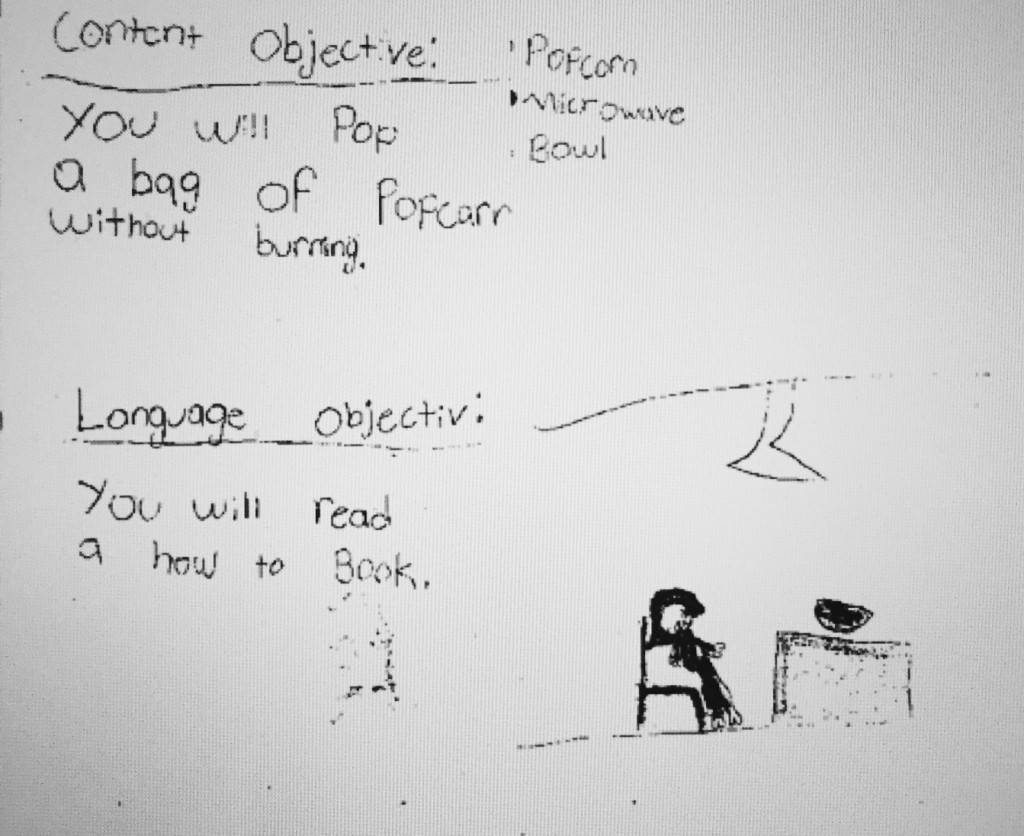
Content objectives represent what students will learn about the topic being studied.

Language objectives are what students will learn about language in the lesson that will advance their English proficiency. We suggest that teachers consider the many aspects of English as they design, post, and share the lesson’s language objectives with students. For example:

Content objective

Students will identify the causes of the Great Depression and of the economic crisis of 2008.

Language objectives: 

Students will use conjunctions when explaining the causes of the two events.

Students will compare the causes of the events using comparative language.

In this case, specific uses of language will be reviewed, for example, by referring to a posted list of conjunctions and discussing comparative language using examples. The activity might be to discuss the events with a partner and write sentences about the causes and points of comparison on a poster. The discussion and written points will provide the opportunity for students to use conjunctions and comparative language. 

Using language objectives as a “teachable moment” advances students’ language learning; language teaching and practice are embedded into content lessons. Teachers don’t need to have a strong background in English grammar to design effective language objectives. ESL or ELD standards provide language structures and grammar points that students need to learn and are an excellent resource for teachers as you write language objectives.  

We suggest that you select and write language objectives that address the type of academic language your multilingual learners need to understand the content and perform the activities in the lesson.  

This puts the focus squarely on teaching and learning, not activities. 

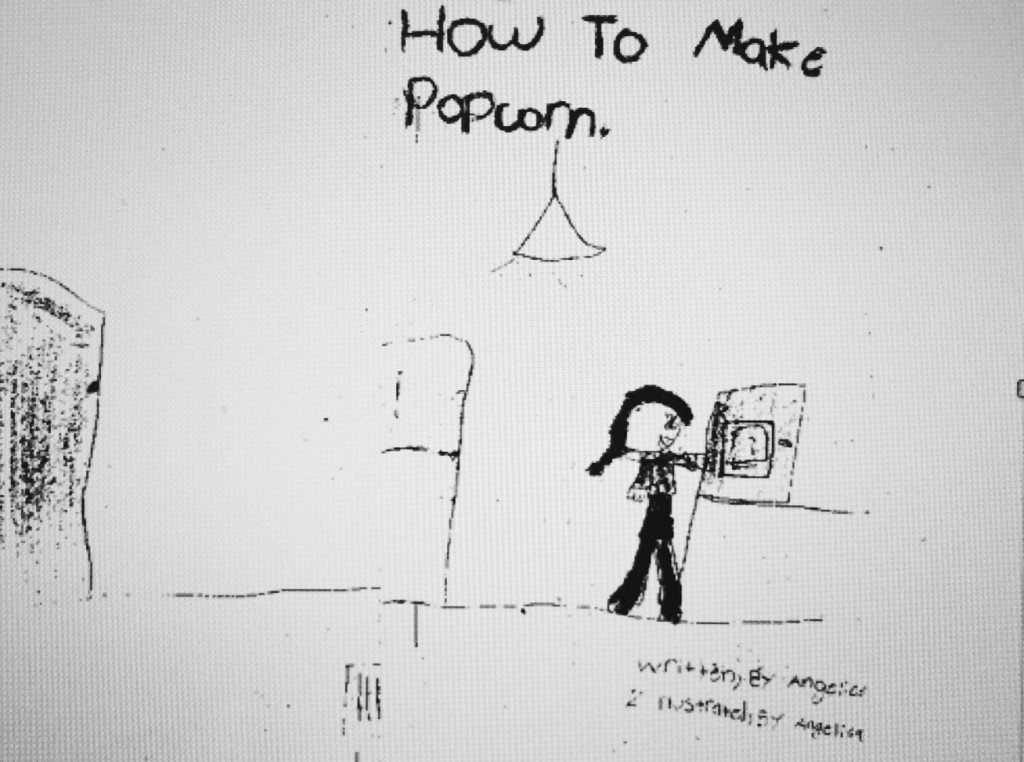
Activities are not language objectives, although they may provide language practice. Here’s another example to help make the distinction clear.  Students will complete a Venn diagram is not a language objective. A Venn diagram is a tool that can help a student demonstrate meeting an objective such as, Students will read a text to find and record similarities and differences between two animals. If they complete the graphic organizer after reading, the teacher can see whether they can read for a purpose and find details. The Venn diagram might in fact be used later as a resource to support another language objective such as Students will use comparative language to discuss similarities and differences with a partner, but while it has captured information and is used to talk about that information, it is not the learning objective.

Multilingual learners require opportunities throughout their school day to learn about and practice using English, not just during time with the ESL or ELD teacher. Writing language objectives prompts teachers to think about the language needed for full participation of all students in a lesson and makes the specific aspect of English being learned and practiced visible to students. 

For further discussion on language objectives, see Developing Academic Language Using the SIOP Model and Making Content Comprehensible for Multilingual Learners: The SIOP® Model

New Teaching Ideas for a New School Year

After three school years filled with challenges, long hours, and unpredictability, teacher burnout has been common. So, it was particularly heartening that our 2022 SIOP National Conference was filled with participants who were enthusiastic, engaged, and generous in sharing their own experiences and expertise. I asked Dr. Katie Toppel, who recently joined our SIOP author team, to provide her perspective on the conference. I hope you’ll be able to use some of the ideas she shares as a new school year begins.

Attending professional conferences leaves me feeling reenergized, brimming with new ideas to put into practice and share with colleagues. This year, in particular, I was really in need of that spark. There is something so special about coming together with other passionate educators and learning with one another. I always love the opportunity to decide what sessions I want to attend because I get to choose areas for professional learning that match my personal interests and curiosities, my specific role, and the professional goals I’ve set for myself.  Sometimes it’s challenging to choose among all of the fantastic offerings! The 2022 SIOP National Conference once again exceeded all of my expectations. Educators from across the globe came together in virtual community, filled with excitement, outstanding ideas for implementing SIOP, and an openness to learn from one another. Even though it would have been wonderful to be together in person, the virtual conference experience includes the added benefit of being able to view recorded sessions afterwards. What a wonderful opportunity to listen to more, listen again, and process all the information! 

When I reflect on the sessions I attended, the keynotes, and all the interaction on Twitter and the Whova app, I am so thankful to be part of the SIOP community. The SIOP National Conference is a great learning experience for both new and established SIOP educators. What is truly amazing is the wide variety of ways presenters use SIOP as a foundation for navigating many different aspects of instruction such as technology integration, SEL, and co-teaching. On behalf of the SIOP author team, I want to extend a sincere thank you to all of the presenters who took the initiative and time to share their ideas and expertise with our community. This year’s conference theme says it perfectly—we are Better Together! 

I was excited when Jana asked me to write a blog post about the conference because writing is a helpful way to reflect and process new learning. I created a graphic for each session I attended to highlight key points, and I am excited to revisit those to share with you! 

The graphic below shows some of the memorable takeaways from a wonderful session on differentiation by Yvonne Williams. I really loved the ABC acronym Yvonne used (Activity Before Concept), emphasizing how beneficial it is to engage students in activities that set a foundation for learning prior to introducing new content concepts. Shared experiences support SIOP’s Building Background component by providing opportunities for students to engage with activities that intentionally contribute to their understanding of more complex concepts. I was reminded of the Language Experience Approach and how meaningful it is when students can communicate ideas based on their own lived experiences. It’s particularly fun when those experiences are shared within the classroom community. Yvonne included a graphic (created by the Robert Wood Johnson Foundation) with bicycles to contrast equity and equality. She made the point that we don’t need to change the mode of transportation (the mode of lesson delivery), but to make adjustments based on students’ needs. She identified many strategies, supports, and scaffolds that support educators in differentiating content for multilingual learners that align with SIOP’s Comprehensible InputPractice & ApplicationInteraction and Lesson Delivery components.

Social Emotional Learning (SEL) has become a priority in classrooms as a result of the pandemic and the role it plays in creating caring, just, inclusive, and equitable learning environments in which students can thrive emotionally and academically. Andrea Rients’ session on SIOP and SEL showcased many ways educators can connect to and leverage multilingual learners’ assets, such as their cultural funds of knowledge or language brokering skills, in SEL lessons.  SIOP Feature 7, Concepts linked to students’ backgrounds, is an integral part of Building Background as well as designing culturally and linguistically responsive instruction. Social Emotional Learning centers students’ feelings, stories, and experiences, so there is a natural connection to designing lessons that support students to accurately communicate what they are thinking and feeling as well as empathetically listen to their peers to gain understanding of multiple perspectives. Using SIOP as a framework for SEL lessons is a powerful way to ensure that multilingual learners’ have a voice and feel connected as valued members of their school and classroom communities.

One of the presenters I learned a lot from was Susan Patterson in her session on text engineering. SIOP Feature 5, Adaptation of content, is necessary to ensure students at different levels of language proficiency can access and understand content. One way to adapt content is through adapting texts, or text engineering. Susan emphasized the importance of amplifying, rather than simplifying, texts through the strategic use of visuals, audio, and additional text such as synonyms, translations, subheadings, or simple summaries. The goal of engineering text is not to alter a text so that it is easier to read because it is devoid of challenging content, rather to enhance a text so that it retains the same content with features that make it more comprehensible. Susan also shared a resource called The Noun Project, where she finds photos and icons to use in engineered texts. In the past I worried that adapting texts was too challenging and time consuming, so I really appreciated Susan’s session which gave some clear, actionable ideas for text engineering. 

Another session that left me feeling really excited was Shadia Salem’s presentation on technology tools that promote language development and student engagement. Technology is everywhere and we need to be selective about the tools we choose with a specific lens on how well they promote language development. Shadia shared examples of multimodal tech tools that engage all of the language domains. She talked about the value of tech tools that empower students by providing opportunities to express and represent knowledge uniquely through various options that incorporate reading, writing, speaking, and listening. I was incredibly impressed with the videos she showed of young students using lots of content vocabulary as they engaged in assignments and explained their thinking about the work.  One of the new ideas I got from Shadia’s session was using Padlet to have students share about books they are reading or have read. I love the idea of students posting selfies with their books along with written or audio content to describe the books and encourage others to read them. Shadia’s session was a great reminder to carefully choose tools that give students access to technology that supports SIOP Feature 21, Application of content and knowledge in new ways, and SIOP Feature 22, Integration of all language skills

Finally, I can’t leave out the fabulous keynote presentation by Kelly Yang, author of the Front Deskseries. Another benefit to the virtual conference is that I was able to enjoy Kelly’s session alongside my two elementary-aged daughters who love her books. Kelly shared about her experiences as an immigrant student who came to the United States at age six, not knowing a single word of English and who barely spoke in her first-grade classroom. Her dream was to be an author, but she questioned if that could be a reality because none of the authors of books she read looked like her. Kelly’s session contained so many important messages about the value of representation and making sure that all students see themselves, their language, their families, their cultures, and many other facets of their identities in the books, lessons, and curriculum that they encounter in school. 

These are just a few highlights from three wonderful days of learning. I am so appreciative of the excitement and dedication within our SIOP community because sharing our ideas, strategies, and techniques helps us all continue improving our instructional practices for the benefit of multilingual learners (like Kelly!) who have big dreams and deserve to achieve them. 

Five Steps to Family Literacy for Multilingual Learner Families

Now that a new school year is upon us and we are generally able to gather together again safely, it seems timely to repost about family-school partnerships. First posted in August 2020, the pandemic delayed in-person meetings which meant that readers couldn’t begin taking steps to start a similar literacy program. The program featured here has benefits for students, families, and schools. I hope you’ll garner something useful that might be implemented in your school. 

The advantages of parent involvement in their child’s school life are well documented. Students’ academic achievement is positively impacted when their parents are involved in their education. What constitutes “involvement?” A meta-analysis of studies found that the relationship between parent involvement and student achievement was strongest if parental involvement was defined as parents’ expectations for the academic achievement of their children. This means that parents, especially those of multilingual learners, need to know the academic expectations of school in order to support their children in meeting those expectations. 

There are myriad ways to create family-school partnerships with multilingual learner families. A family-school program at a middle school in Texas created a path for parent literacy called, English for All. The program was unique in 3 ways and went beyond the typical adult ESL programs offered to communities as an outreach method. First, a goal of the program was to create a student-centered school, one in which families become an integral part. Secondly, classes were geared to the needs of the parents rather than simply being an English language class. Finally, the program offered an avenue for speaking to parents about their student’s performance in the classroom. 

One of the most significant outcomes of the English for All program was that student achievement improved for those students whose parents were in the program. Based on practice standardized tests, growth in reading, writing, speaking, and listening for participating students exceeded that of students whose parents did not participate in the program. This trend is promising, although the Covid-19 pandemic interrupted standardized testing, making official data unavailable. However, the trend is consistent with research on parent involvement and its positive impact on student achievement. 

How did English for All get started?

In order to recruit participants for the program, a letter was sent home to the families of all mutlilingual students at the school describing the benefits of the program and the nature of the classes. The letter was written in both English and Spanish. Parents were asked to return a form indicating their interest. Once the number of parent participants was known, then the following 5-step process was initiated.

English for All: Five Steps 

1. Identify a team. One team member was an administrator so that the team had someone with authority to open the building, be a liaison to the superintendent and/or site principal, acquire funds as needed and so forth. The superintendent approved funds for teacher pay and for necessary supplies. Teachers on the team volunteered to participate and were paid for their time. In other programs similar to this one, teachers might give their time as a service to the community since finds aren’t always available to support teachers after regular hours. However, it is highly recommended that funds are provided to teachers, especially since most teachers already go the extra mile.

2. Assess the needs of the adult students. There were two aspects to the assessment. At the initial meeting, each parent was given a questionnaire asking about their perception of the school, what they expected to learn in the course, and specific needs they may have. The assessment revealed that, for example, some parents wanted GED preparation while others wanted to learn and practice interview skills. In addition, parents were given an entry quiz to determine their home language and their level of English proficiency. 

3. Devise a plan based on assessment results. All parents were Spanish speakers so the only consideration for planning for class groups was level of English proficiency.  Admittedly, the program couldn’t accommodate each of the requests that parents wrote on the questionnaire, but the course content was centered on what the majority wanted and set out to make it “a great place to learn” for all. 

Teachers were assigned to classes based on their strengths. One teacher had an affinity for newcomer students, so she was assigned to beginning speakers while an English teacher was assigned to the advanced group. Knowing teachers’ strengths and using them appropriately was important for the program’s success. 

It was decided that sessions would take place on Tuesday and Thursday evenings from 5:30 – 7:30. 

The team elected to include students in the program to serve as a support to their parents in the adult classes. Students could also receive tutoring in math, history, and science if they needed extra support in those subjects.

 4. Implement the plan. When parents arrived, they went to their assigned classroom where there was a sign-in sheet. Light refreshments were provided which was appreciated since many parents came straight from work. 

5. Conduct follow-up and feedback. Using feedback to inform the program was a priority and was one of the most important aspects of the five steps. For example, the original 5:30 meeting time didn’t work for some parents, so the time was changed to 6:00. This adjustment based on feedback illustrated its value. If not for the feedback, some parents may have quit coming without the teacher ever knowing why. 

Teachers also were provided feedback by the administrator who observed classes. For instance, he suggested ways to make content and language objectives more student-centered and made suggestions for changing some content. Teachers also shared with their school colleagues about what they did in their evening classes and colleagues provided feedback. Follow up and feedback were done in a spirit of collaboration. Parents appreciated the responsiveness of the team and teachers felt supported by the administrator and fellow teachers. 

Structure of English For All Classes

Classes were designed to give parents a window into their child’s school day, so each class was set up to resemble the usual classroom. Since Aldine ISD uses the SIOP Model for lesson planning and teaching, evening lessons also reflected SIOP’s components. Parents were able to experience a teaching and learning process that was similar to that of their students. 

Teachers posted content and language objectives for the lessons each evening. The team thought it was important for parents to see that lessons were well thought out and were not pulled together on the spur of the moment. Each lesson provided opportunities for parents to speak, listen, read, and write. 

The most important components of SIOP for adult learners in Aldine’s program were Lesson Preparation, Building Background, Comprehensible Input, Strategies, Interaction, and Practice & Application. (Lesson Delivery and Review & Assessment weren’t as critical in this context). Some of the specific SIOP features the teachers utilized included:

  • Define clear content and language objectives.
  • Plan meaningful activities that incorporate language.
  • Provide opportunities to engage in academic conversations. 
  • Teach specific academic vocabulary. For example, vocabulary terms were taught before practicing interview skills.
  • Plan with all proficiency levels in mind. 
  • Use wait time appropriately.
  • Clarify concepts as needed.
  • Ask higher order questions.
  • Provide hands-on activities such as vocabulary cards for beginners and computer programs for the advanced group. 
  • Differentiate instruction based on parents’ needs and strengths.
  • Use a variety of grouping configurations, allowing parents to move around.

Parents were involved in a variety of activities such as role playing, mock interviews, matching pictures with English words and saying words aloud, and friendly competitions where each table of parents tried to be the first to complete an activity and win a door prize. Also, homework was given, and completed homework assignments were presented in class. 

The teachers created a safe classroom environment where parents felt free to actively participate. Parents were grouped in ways that ensured that each would be successful. They clapped for one another and were very supportive. Parents were from various regions of Latin America and through the activities they learned about other cultures and shared their differences. For example, during the holidays, classes made snow globes to represent their cultures. Each parent, usually along with their child, did a presentation of their snow globe in English. 

There were numerous benefits of the program. The primary purpose of this program was to increase parents’ English proficiency. In the process, it created a bridge between the school and families. Relationships that developed through the program carried over to the school environment. As mentioned, students’ academic performance improved, and there were social-emotional benefits as well. For example, a girl was having difficulty getting along with others in her class. The girl and her parent had been participating in the English for All program and during one of the evening classes, the student’s teacher and the administrator had the opportunity to discuss the issue with her. The student confided that there were a group of girls who did not like her because she was different. The next school day her teacher and the administrator met with the students and had a conversation about the issue and about how they were going to find a solution. The students apologized to the girl, and they then became friends. Subsequently, the girl began flourishing in the classroom and growing academically. 

A special thanks to Dr. Frank Cisneros, Assistant Principal in Aldine ISD, who had the vision to start the English for All program and was the administrator behind its implementation.