What the Science of Reading Is – And Is Not – For Multilingual Learners

Admittedly, I’ve been somewhat surprised by the pushback expressed on various social media platforms about multilingual learners and what is currently called the science of reading (SOR). First, as I discussed previously, SOR refers to the body of multi-disciplinary research evidence about how individuals learn to read. Many of these empirical studies have been around for decades and have been supported by subsequent research. The term, science of reading, has more recently become popular since an APM podcast went viral prompting the topic to become a prominent discussion in educational circles and in the media. 

It’s possible that the concerns expressed are rooted in past practices where the needs of multilingual learners were not met – or even addressed. Those of us who have been advocates for multilingual learners for decades have worked to raise teacher expectations, provide access to grade-level curricula, promote an asset orientation, and ensure that teachers make content comprehensible for multilingual learners.  

However, some of the comments reflect misconceptions about what SOR is. The most common include:

Phonics. Explicitly teaching sound-symbol correspondence is essential for students to be able to decode words automatically and accurately. But it’s not the whole enchilada. The National Reading Panel Report and the subsequent National Literacy Panel on Language Minority Children and Youth, as well as the What Works Clearinghouse Practice Guide promote the full complement of literacy skills, including development of oral language, academic vocabulary, and comprehension. 

Perhaps it seems like there is an overemphasis on phonics but that may be because many teachers have not been adequately prepared to teach students how to unlock the code. In our work with multilingual learners, we focus on ways to increase English proficiency, to scaffold instruction and to help students access grade-level text. Teachers may have lots of good ideas for building vocabulary or engaging students in partner talk to develop oral language but teachers themselves report that they typically don’t explicitly teach phonics. In a 2019 Education Week Research Center survey:

86 percent of teachers who train teachers said they teach phonics. But surveyed elementary school teachers often use strategies that contradict a phonics-first approach: Seventy-five percent said they use a technique called three cuing. This method teaches children to guess words they don’t know by using context and picture clues, and has been criticized for getting in the way of learning to decode. More than half of the teachers said they thought students could understand written passages that contained unfamiliar words, even without a good grasp of phonics.

Phonics instruction is only one piece of the complex process of literacy development, but it is critical piece and apparently underemphasized in classrooms. 

A curriculum. There seems to be a perception that SOR is a “thing.” One of my favorite stories in this regard came from a colleague who taught a language and literacy course. Toward the end of the semester a well-meaning student asked, “Do you know of an article that will help me learn what the science of reading is and how to do it?”  The professor took a deep breath and tactfully explained that what they had studied all semester is the science of reading. 

Certainly, reading instruction is most effective when teachers are provided with the necessary guidance and student materials to implement research-based literacy instruction well. The science of reading should be reflected in the materials and resources used, but a curriculum is not SOR, per se. 

“Drill and kill is a pejorative term referring to decontextualized, repetitive skill practice that takes the fun out of learning. Research confirms that explicit teaching followed by practice is effective for multilingual learners, but practicing a skill seems to have a negative connotation. I’m a tennis player and I continue to take lessons — explicit instruction on a specific skill with lots of practice. I would be a better player if I had more time to practice! Practice builds competence.

Literacy skill practice need not be drudgery. Practice can be made meaningful in a number of ways. For example, by talking about the skill (e.g., decoding short e), reading a text and pointing out words with the sound, asking students to repeat the words, and having students write a sentence with the words and read it to a partner. There is also a vast array of digital resources that offer fun, engaging practice of literacy skills.

One-size-fits-all. This idea is an artifact of the past. Differentiation has become part of the fabric of lesson planning. Teachers have become much more aware that multilingual learners are learning to read in a language they are simultaneously learning to speak and understand so literacy instruction is not the same for every student. 

A “disservice” for multilingual learners. This misconception is unfortunate. In the past several years, I’ve observed in over 200 classrooms and have witnessed firsthand what I would consider a disservice. Too often multilingual learners are languishing as they sit for extended periods of time with a book they cannot read, and they only meet with the teacher for instruction once or twice a week. There has been lots of unproductive, lost instructional time which is a disservice to the very students who can least afford it. 

These many, many students cannot comprehend stories because they cannot decode the words in the story. There is no joy or love of reading unless students are taught to read well. 

Hopefully, with more knowledge and understanding – and with more students learning to read well by using resources that reflect the research — these misconceptions will fade away. After all, we all want the same thing: students who are confident, proficient readers and writers, preferably in more than one language. 

An elaborated podcast on this topic can be found at Leading Literacy https://podcasts.apple.com/us/podcast/leading-literacy/id1566671003?i=1000574657928

Clarifying Multilingual Terminology

When was the last time you were in a situation where colleagues were using an acronym or educational term that everyone seemed to know…except you?  

We use a lot of specific terminology and acronyms in education, and new ones seem to crop up regularly. When it comes to multilingual learners, terms vary by geographic region, and certain terms are preferred over others by some groups or organizations. A version of this topic was posted in 2016 and since its first posting, there have been additional changes which warrant an update. Consider the information here as a resource for those of you who find yourselves perplexed by the wide variety of terms used for students who are not yet fully proficient in academic English and qualify for language support services. (Notice how I had to work hard not to use one of the terms below?!) 

English learners (EL), or English language learners (ELL).  These terms have been commonly used and are straightforward descriptors of students who are learning the English language used in schools. The terms imply that another language is spoken at home and that these students are in the process of becoming English-proficient. 

Multilingual learner (ML). Becoming widely used to acknowledge the home language assets these students possess in addition to acquiring English. For some students, English is their second, third (or more) language making the term more accurate in capturing their linguistic competencies. “Multilingual learner” is used by WIDA, appears in some U.S. Department of Education documents and academic publications. 

Emergent bilingual (EB). Another term for students who are not yet proficient in English but are moving toward becoming fully bilingual. They continue to develop their home language while learning English. The term demonstrates the value of both the home language and English. Emergent bilingual is the official term adopted by, for example, Texas and Illinois. 

Limited English proficient (LEP). No longer used because of its deficit connotation. An artifact of the past, it appears in federal law so it is used for reporting/accountability purposes. 

English for speakers of other languages (ESOL), and English as a second language (ESL). These terms refer to programs but are sometimes applied to students, as in “She is ESOL” or “We have 37 ESL students in fourth grade.”

Second language learner (L2). Used widely internationally and in the literature to indicate a student who is learning the official language used in a country’s schools in addition to the home language.

Dual language learner (DLL). Used specifically for children under the age of five who have at least one parent or guardian who speaks a language other than English at home. These children are developing their native language proficiency while learning English simultaneously. 

Linguistically diverse. A broader term that includes students who are not yet proficient in academic English, and those students who speak a non-standard form of English such as speakers of African American vernacular English (AAVE), Creole or Hawaiian Pidgin English.

English learner student with a disability (ELSWD) or dually identified student. These terms are used for students who have been formally identified as having a disability and have an IEP. Their dual status means that they are entitled to full English learner services including daily English language development (ELD) in addition to special education services.

Long-term English Learners (LTEL). These students have been enrolled in U.S. schools and designated as English learners for six or more years and have not yet met exit criteria. Definitions and exit criteria vary by state and district. Some specify fewer years as EL or differ on criteria needed to exit English learner services. 

Students with interrupted formal education (SIFE) and students with limited or interrupted formal education (SLIFE). These terms are used specifically with Newcomer students who have had interruptions in their educational backgrounds of more than two years or, in the case of SLIFE, may have had limited formal education before enrolling in U.S. schools. The distinction these terms offer is important for providing appropriate programs and services.

Ever-ELL. This term is used typically for research purposes. It is assigned to a student who has been designated as an English learner at some point in his or her school career. The category accounts for students who become English proficient but at some point were English learners. They are distinct from native English-speaking students. 

Never-ELL, English only (EO), or native English speaker. These terms all refer to students whose home language is English and English is the student’s first or native language. Some concern about English Only as a designation is that it connotes monolingualism when that may not be accurate. 

Non-English Language Background (NELB). A school designated term for students in homes in which a language other than or in addition to English is used. That is, any home other than a monolingual English-speaking home. 

Speakers of languages other than English (LOTE) or primary home language other than English (PHLOTE).  These terms describe students who have the asset of one or more languages in their repertoire. Used in dual language programs. 

As you can see, some terms depict the unique needs of subgroups of learners, e.g., LTELs, ELSWD, and SIFE, and are critical for ensuring that schools provide appropriate programs and services for them. However, when referring to other students learning the language of school, it would be helpful to educators, researchers, policy makers, students, and their parents if there were a single agreed-upon term. Uniformity is unlikely though since educational terminology and related acronyms are ever evolving. 

Using Inquiry-Based Learning with Multilingual Learners

The popularity of inquiry–based learning, an approach that emphasizes the student’s role in the learning process, has steadily increased. Traditionally used in science education, inquiry has expanded to other content areas. Students learn by doing which allows them to build knowledge through discovery, experience, and discussion. The process typically involves students formulating a question about a topic that piques interest, collecting data, analyzing the data, and drawing conclusions. Students individually or collaboratively write a report about the findings and present those findings to peers. Inquiry is most effective when it becomes part of the classroom culture, where students routinely think deeply, ask questions, share opinions, and research topics.

In many cases inquiry lessons, or lessons with an inquiry activity, reduce the language demands on multilingual learners by providing opportunities for exploration with visuals, hands-on materials and peer discussion. By allowing multilingual learners to tap their curiosity, follow their instincts, and learn through discovery, they grow and develop as independent learners. Multilingual learners’ participation in the reading and writing aspects of the lesson is scaffolded by working with a more proficient English-speaking partner or small group.

For readers familiar with the SIOP Model for teaching multilingual learners, you undoubtedly recognize many shared characteristics between SIOP and inquiry-based learning. In classes with multilingual learners, teachers using an inquiry approach need to be mindful of several linguistic considerations and instructional supports for these students.

Content and Language Objectives

Research shows that establishing clear learning objectives that are relevant and understandable can lead to improved student motivation and higher academic achievement. Having both content and language objectives for every lesson is a hallmark of SIOP. Both are critical for ensuring that the lesson’s purpose is visible for students. Multilingual learners are learning new content and a new language simultaneously so sharing what will be learned is particularly important for these students.

Teachers sometimes misinterpret objectives as being incompatible with an inquiry approach when in fact all lessons, inquiry or not, have expected outcomes for students. We have seen in science, for example, that some teachers say providing the objectives at the start of the lesson gives away the inquiry process. We have worked with those teachers in two ways:

  • Presenting objectives after an introductory exploratory activity. The exploration aspect is preserved yet the purpose of the lesson and learning outcomes are clarified for students.
  • Changing the way they design the objectives. For example, the content objective, Students will investigate what factors contribute to water pollution,is better with an inquiry lesson than, Students will investigate the effect of pesticides and trash on water pollution. A language objective such as, Students will fill out an observation report using complete sentences, doesn’t reveal what students will discover. However, Students will describe, using complete sentences, the effects of pesticides and trash on water pollution, gives too much detail

Content objectives are based on content standards and are typically tied to curriculum or pacing guides. Teachers have more latitude with writing language objectives and can connect language learning specifically to each lesson which doesn’t adversely affect the inquiry process.

Students’ Language Development

Sufficient language supports are critical so that multilingual learners aren’t at a disadvantage due to their limited English proficiency. There are many ways to provide language supports with inquiry-based learning that teacher should implement in every lesson.

  1. Focus on key vocabulary. At a minimum, multilingual learners need to understand the essential vocabulary and procedures they need to participate productively in lessons. From the sample objectives above, words such as investigatefactorsinfluence, pesticides and trash would need to be explicitly taught or reviewed and an observation report form would be shown so multilingual learners clearly understand what they’ll be doing. During the lesson, multilingual students likely will become frustrated if they don’t understand the key terms their peers are using when talking about the activity. Previewing key vocabulary and posting it for reference increases multilingual learners’ full participation.
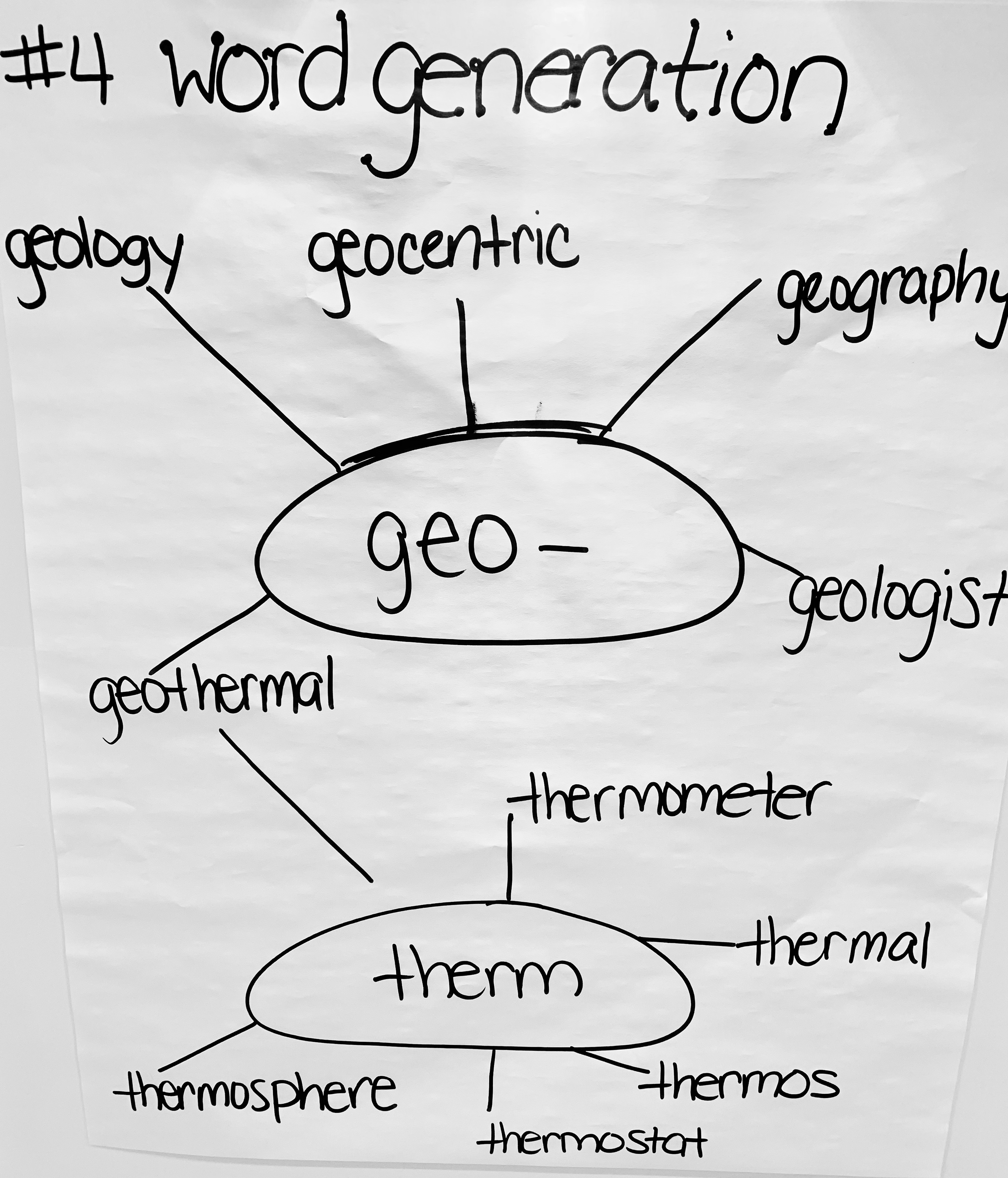
  2. Increase word consciousness. With guidance, students can discover how words work and how they can make sense of unknown words. For example, there is exponential power in identifying roots and affixes (prefixes and suffixes) to derive word meaning. Also, students might explore resources for defining words and their meaning.
  3. Use vocabulary in context. After the inquiry portion of the lesson, additional vocabulary terms that students need to learn are highlighted or explicitly taught (if needed), discussed, and identified in the product created during group work. This kind of reinforcement of vocabulary in context makes the words more relevant and meaningful for students — and more likely to be retained.
  4. Accept translanguaging for student-to-student communication. Multilingual students use all their linguistic resources to make sense of the lesson. That is, they clarify and discuss concepts their home language during the lesson, as well as English, as needed.
  5. Provide language frames so students can talk about what they’re discovering.To advance students’ English proficiency, be sure to connect the language frames to a language target such as language functions, e.g., compare, predict, explain, or formulate questions. For example, When I observe _____________ I notice ___________. My prediction is that _________________.
  6. Language skills are needed by all students. Many of the skills needed for inquiry lessons can be taught to multilingual learners and other students who need instruction in, for instance, how to read research and take notes, how to write up observations and cite evidence, how to write a summary, and so on.

Questioning

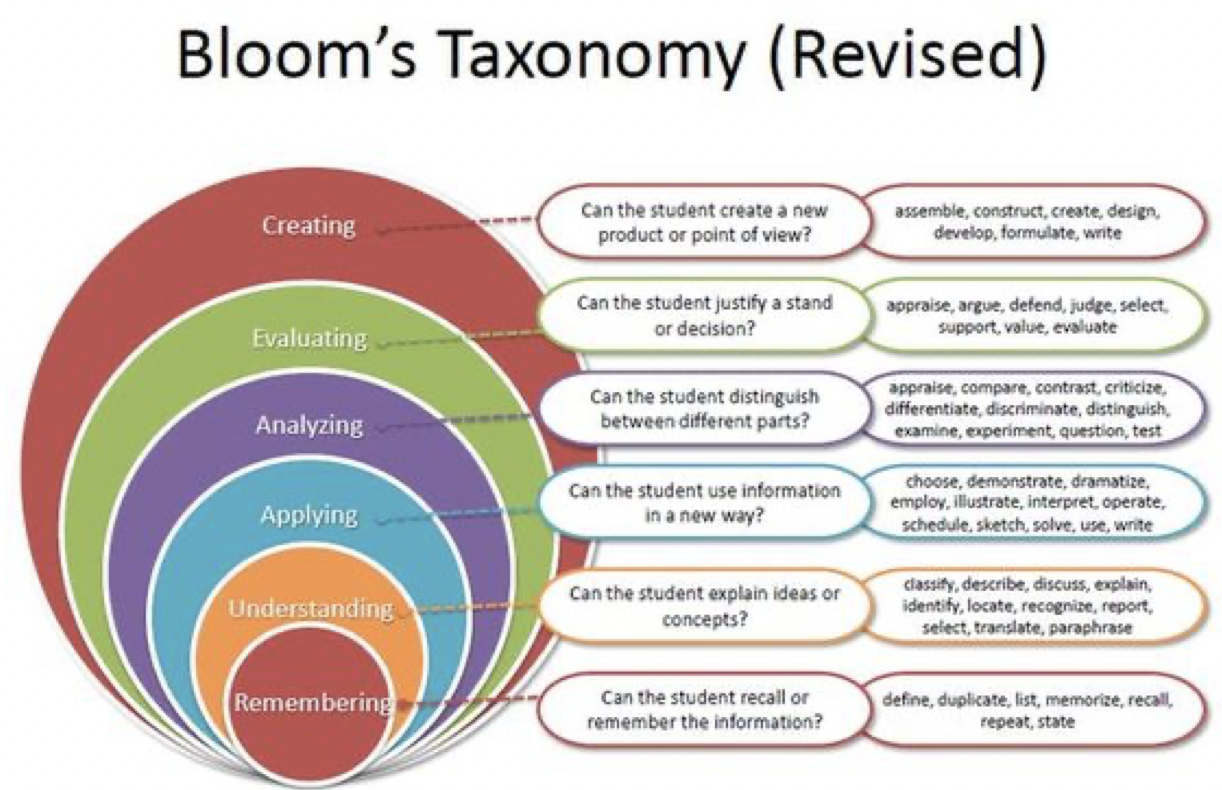
An important aspect of inquiry-based learning is teaching students how to ask the kind of questions that elicit higher levels of thinking such as analysis or evaluation. Teachers need to think about the kinds of questions that get students to think more deeply about a topic, and then model those questions. Otherwise, students likely will rely on lower-level questions during exploration that can be answered with a Google search. One of SIOP’s Features (#15) is to, Use a variety of questions or tasks that promote higher-order thinking skills. Provoking complex thinking is an explicit goal in both inquiry-based learning and SIOP lessons.

Student Agency

Inquiry learning is characterized by a classroom environment that allows students to learn through exploration and discovery. It is student-centered and encourages independent learning. Self-directed learning allows students to make choices and builds self-confidence in themselves as learners. SIOP teaching also recognizes each student’s background, culture, language and interests and considers each one an asset that can be connected to learning.  Here are several ways that both inquiry and SIOP build student agency:

  1. Build background.Teachers can make lessons relevant by connecting, for example, historical documents to students’ lives. Asking students to think about how the Bill of Rights might be different if it were written by people of color allows them to think deeply about the issues from their own perspective. Student-driven inquiry connects students’ interests and curiosity to the lesson by encouraging them to ask their own questions and seek answers. SIOP’s Feature #8 asks teachers to link students’ background experiences to the lesson’s concepts. Teachers encourage students to use what they know and use their lived experiences to make sense of information, guiding them to see the connection between the two.
  2. Develop expertise. A goal in many inquiry lessons is for each student to become an expert in an aspect of the content being studied. As students present the results of their inquiry, their understanding of the content is deepened and their knowledge is expanded by the presentations of others. SIOP’s Practice & Application component encourages hands-on experiences, grappling with content, and applying it in meaningful ways including presenting their findings to peers. There are many SIOP activities that encourage students to become experts on a topic.
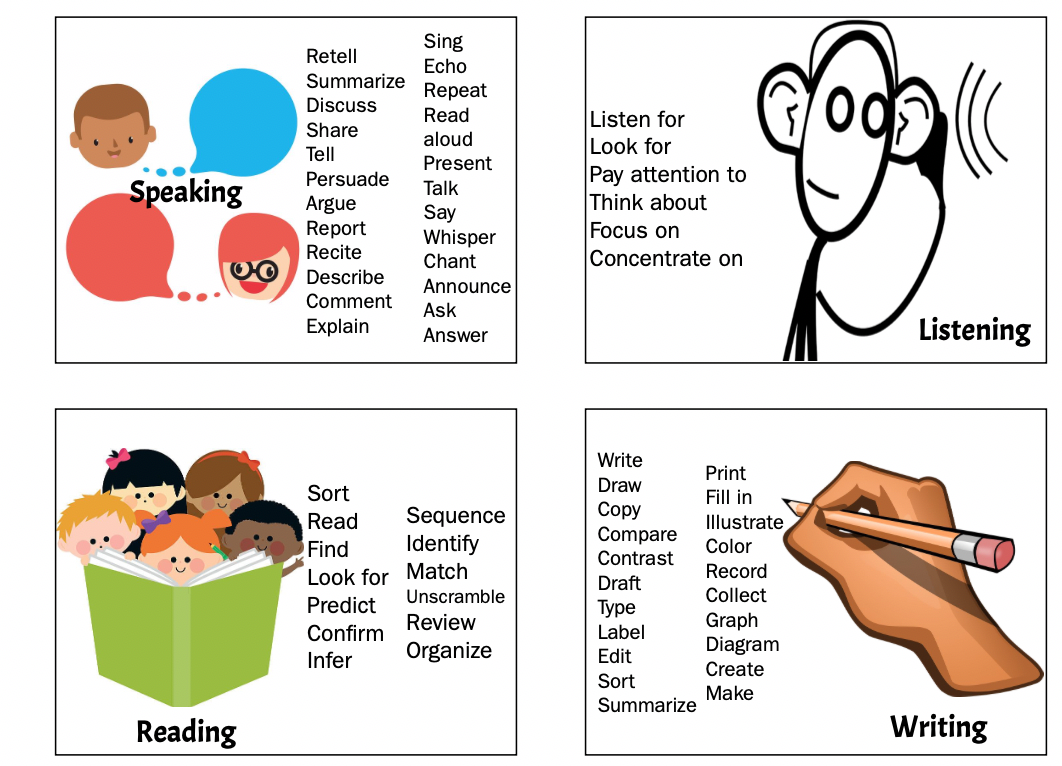
  3. Provide meaningful activities. Inquiry lessons need to resonate with students to be effective. A topic or question is unlikely to spark curiosity or enthusiasm if it isn’t of interest to students or if the activities aren’t motivating. SIOP’s Feature #6 suggests that lessons include meaningful activities that integrate the lesson’s concepts with opportunities to practice and develop reading, writing, speaking, and listening skills. In this way, multilingual learners gain proficiency in English while participating in interesting, relevant learning.

Reviewing the Process

An important aspect of being a good researcher is to reflect on your outcomes. Ask students to reflect on both what they learned and how they learned it. SIOP’s Strategies component promotes the use of learning strategies such as metacognition or thinking about thinking. Similarly, students should reflect on what worked and what they might have done differently. Here is an opportunity to bring in the lesson’s content and language objectives. Students can assess whether the outcomes gained from their experiences met the objectives, citing evidence like good researchers do.

The alignment of SIOP with inquiry-based learning is clear. A proponent of inquiry-based learning said, “When teachers design inquiry-based learning activities, they should integrate them with the curriculum, relate them to students’ past experiences and promote them with lifelong learning and critical thinking skills”

That’s a description completely compatible with SIOP.

3 Research Findings Every Educator Should Know

It seems like everywhere you look there are more books, articles, and blogs written about what works with multilingual learners (MLLs), but these resources don’t always reflect research-validated approaches and interventions. Empirical studies provide guidance for achieving desired outcomes that go beyond what intuitively seems like a good idea for teaching students in this population. The following areas of research are of particular importance in informing practice, especially for MLL students. 

1. Academic language. Cummins (1979) introduced the distinction between conversational language and academic language, and others more recently have discussed specific ways that academic language is challenging (Scheppegrell, 2020), particularly for multilingual learners. Academic language is more formal and abstract than conversational language and uses complex sentence structure (e.g., embedded clauses and conjunctions), highly sophisticated, abstract vocabulary (e.g., representational democracy in social studies), and rhetorical forms (e.g., figurative language), and it is encountered almost exclusively in school. 

Research has identified the critical relationship of academic language to reading comprehension, a cognitive and linguistic process needed to acquire and use knowledge in every academic content area. As MLL students become more proficient in English, they become more efficient readers and more similar to their English-speaking peers in their reading ability. Conversely, if EL students don’t become sufficiently proficient in English, they expend more cognitive effort, and their reading remains inefficient which negatively affects achievement and motivation. 

The importance of advancing academic language development is clear. Findings verify that MLLs don’t “pick up” academic language nor will the achievement gap close without explicit instruction in English language development (ELD). A separate ELD time each day focusing on English language instruction is critical but may not be sufficient for expediting English language growth. In every content lesson, teaching key content vocabulary and exploiting teachable academic language-learning opportunities likely will enhance English proficiency. 

2. Student assets. The idea that students come to school as empty vessels in need of filling has been dispelled. Indeed, students begin school with a minimum of 5 years of lived experiences, accumulated knowledge and language development in their home language (L1), and these continue to grow with each subsequent year. This treasure trove should be acknowledged and built upon as students learn academic content in school. 

For multilingual learners, some lived experiences are culturally influenced, such as attending quinceañeras or receiving red envelopes as gifts, and others are common to their age group such as popular social media sites, video games, and sports. Linguistic knowledge in their L1 can be used to bootstrap learning in English. Studies suggest that instructional routines that draw on students’ L1, their knowledge and cultural assets support literacy development in English. Some examples of practices used in studies include previewing and reviewing materials in children’s L1, providing opportunities for students to engage in conversations around text with peers using their L1 when needed, giving definitions for key vocabulary terms in both English and their L1, and introducing key concepts by connecting them to students’ knowledge or experience in the home and community. Teachers who don’t speak the language of their students shouldn’t be apprehensive about using these types of practices. Many technologies assist in translating words and definitions, and peers can be used as supports by grouping students with a common L1 together for discussions, then asking each group to summarize their discussion in English. Further, as teachers practice a dynamic interaction style with students, they will learn about students’ lived experiences which, in turn, can be used to connect lesson content to what students know and have experienced. 

Capitalizing on students’ linguistic and experiential assets by linking them to content, materials, and activities have motivational and engagement benefits, and contributes to MLL students’ sense of belonging and well-being.

3. Reading foundations.  Much has been written recently about the science of reading,

a discussion that spans decades. However, little research specifically addresses multilingual learners and how teaching reading may or may not differ for this population. Goldenberg (2020) conducted a review of research on reading and multilingual learners. He summarizes the findings and draws several conclusions. First, learning to read is similar for multilingual learners and English-speaking students. MLL students must learn the same foundational skills as English-proficient students. As Goldenberg says, “Full-fledged literacy certainly requires more, but there is a reason this group of skills is called foundational: It is required for the literacy edifice under construction. As with any building, if all you have is a foundation, you do not have much. Yet, a solid foundation is still essential” (p.133)

Secondly, along with foundational skills, additional supports are required for MLL students so that instruction in English is made comprehensible to them. They need additional instruction in the vocabulary found in text, especially for beginning speakers who are learning to recognize new words as they are read. Also beneficial is additional repetition and rehearsal as well as opportunities to practice. Specifically, beginning readers need practice in developing oral language, primarily in the form of effective ELD instruction to boost English proficiency.

Lastly, as MLL students advance through the grades, the academic language required to navigate grade-level texts and the disciplinary knowledge students need to comprehend texts becomes increasingly complex and demanding. Oral English language instruction and support needs to match the level of challenge for these students, particularly in language-intensive subjects. 

Future research

Developing English proficiency arguably has the greatest impact on success in school. Understanding and responding to the specific ways that academic language is most efficiently developed might offer ways for teaching ELD most effectively and result in accelerated English acquisition. Current studies show the importance of oral language for MLLs to improve early literacy, but which components of the interventions were most impactful remains unknown. 

Secondly, the effects of different instructional arrangements on multilingual students’ achievement should be explored. Debate continues around issues such as whether pull-out or push-in services are more effective, the optimal amount of time devoted to ELD instruction, and whether to group MLLs together or with English-speaking peers. These are areas of practice that warrant investigation.

(A version of this post appeared in Larry Ferlazzo’s Education Week blog)

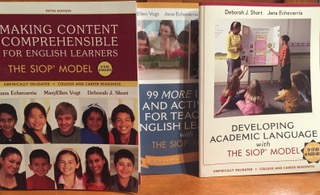
Jana Echevarria, Ph.D. is Professor Emerita at CSULB where she was selected as Outstanding Professor. She is co-developer of the SIOP Model of instruction for English learners and co-author of Making Content Comprehensible for English Learners: The SIOP Model and 99 Ideas and Activities for Teaching English Learners among other publications. 

4 Ways of Integrating SEL with Effective Instruction for Multilingual Learners

While there are a variety of definitions for social-emotional learning (SEL), essentially SEL is the process of learning and applying skills for recognizing and managing emotions, for developing and maintaining positive relationships, learning to set and achieve goals, making responsible decisions, and accepting responsibility for behavioral outcomes – the competencies individuals need to be successful in life. Addressing the social-emotional needs of students has never been more critical, particularly for multilingual learners who have been disproportionately affected by lost instructional time during the pandemic.

In a survey by Education Week, more than 50% of teachers surveyed cited SEL needs as a challenge to grade-level performance. Sometimes educators mistakenly believe that focusing on SEL competencies adds “one more thing” to their already overburdened schedules. However, SEL skills arguably are more effectively developed during content teaching. A recent report suggests specific practices that integrate social and emotional learning with academic learning rather than treating academic content and SEL as separate subject areas. These practices align with our work that makes content comprehensible for multilingual learners while simultaneously fostering language development. Rigorous academic lessons planned through an SEL lens provide opportunities to enhance students’ social and emotional wellbeing while simultaneously advancing learning.

I suppose it goes without saying that SEL first requires teachers to get to know their students. Learning is enhanced in a classroom environment where students’ linguistic and cultural assets are valued, one that provides a safe community of learning, and encourages students to interact together and build relationships. Further, students are encouraged to take ownership of their learning. When an appropriate learning environment is established, the following specific instructional recommendation may be implemented.

  1. Plan intentionally. Incorporating SEL into lessons takes some thought but it is worth the effort since well-planned, focused teaching is effective in promoting learning. First, design and display both content objectives and language objectives for lessons so that learning is transparent and students buy-in to the lesson’s purpose. For example, a language objective may be to practice asking clarifying questions, a skill that helps students take ownership of their learning. The objective is reviewed with students and the importance of asking for clarification inside and outside of school is discussed. Working in pairs, students read their partner’s essay about a significant day in their lives. Partner A ask questions of the author (Partner B) to clarify parts that are unclear or seem to have missing information. This process allows the writer to take ownership of their work and accepting their partner’s feedback offers an opportunity to manage their emotions. Then Partner B listens to Partner A’s essay and provides feedback. The process ensures that their essays are focused and coherent, while at the same time provides practice with collaboration and getting clarification. Setting grade-level objectives, with appropriate scaffolding for success, communicates high expectations to students and engages them in rigorous curriculum. It’s useful to point out to students that setting objectives for a lesson is similar to setting goals for themselves, i.e., what they intend to accomplish in a day, a week, and so forth. 
  2. Structure productive group work. The process of working together productively with peers contributes to a caring community of learning. By interacting and working together, mutual respect among students from different cultures and ethnicities develops. Interaction fosters many important SEL competencies such as establishing and maintaining relationships, improving social interaction skills, finding one’s own voice, and respecting others’ perspectives. Sometimes language frames are provided to assist such as, I understand her point but__________ or I respectfully disagree with _________ because __________. Having students talk in pairs or in small groups minimizes the risk that many students feel in whole group discussions and allows ideas to flow more easily. Structured opportunities for discussion also provide important language practice for multilingual learners. Further, during group discussions teachers can circulate and listen in which allows them to get to know their students better – their ideas, perspectives, personal and cultural assets and lived experiences. Positive interactions between teachers and students foster a supportive environment. Studies have shown improvements on practically every measure schools care about: higher student academic engagement, attendance, grades, fewer disruptive behaviors and suspensions, and lower school dropout rates. Feeling connected to school results in positive outcomes. 
  3. Create conditions for success. Strong academic skills and content knowledge empower individuals to be more self-assured, to advocate for themselves and others, and to pursue their dreams. Research confirms that well-planned, focused teaching is effective in promoting learning. With multilingual learners, teachers adjust instruction based on language proficiency and educational experience so that each student is successful. All students learn the same grade-level content, but through differentiated texts and tasks. That is, students receive the scaffolds they need to be successful in completing work. Although multilingual learners may not be fully proficient in English, they can still think critically and respond to higher-order questions, such as evaluating and making judgements, comparing/contrasting, and categorizing. Group work is particularly effective when the teacher poses a question or topic for discussion that requires higher-order thinking. Asking simple recall questions conveys low expectations for multilingual students and isn’t intellectually stimulating. Further, there is an emphasis on self-reflection and self-assessment using rubrics, providing opportunities to revise and improve upon their work (see example above), and considering how their learning matched up to the lesson’s content and language objectives. Through the introduction of content and language objectives at the beginning of lessons and reflecting on them at the end, students become aware of their daily, incremental learning — both content and language development – which results in gains over time. 
  4. Provide a balance of explicit instruction and practice. Teachers balance direct teaching with opportunities for students to practice new learning, thus deepening their understanding. When students learn the material through clear, explicit instruction, they are better equipped to practice using the language and content independently, with partners or in small groups. Practice and application activities often provide choice in activities that reflect students’ own identities. For example, they may create a presentation, design a game, dramatize the topic, write and perform a song, or generate solutions to real-life problems that represent diverse perspectives. Students have an opportunity to express their knowledge and understanding in a way that is of interest to them. 

The following lesson plan template offers questions to consider in lesson planning, delivery, and reflection. The SIOP Model’s lesson plan ensures that the linguistic and academic needs of multilingual learners are addressed in every lesson. The example here highlights SEL competencies. Other templates can be found here.

SIOP Lesson Plan Template

CONTENT STANDARD: State or District Standard

LESSON TOPIC: Any content area topic including English language development.

OBJECTIVES:

Content – What will students learn or be able to do related to the topic?

Language – What language will students need to advance their English proficiency? Which language forms and/or functions will students encounter in the lessons?

LEARNING STRATEGIES: What higher order questions will you plan to have students ponder? How will you communicate high expectations for your students?

KEY VOCABULARY:  Which terms need to be explicitly taught and practiced so that students can participate successfully in the lesson and complete academic tasks?

MATERIALS: Are the materials culturally relevant to students?

MOTIVATION:

(Building Background)

How will you connect the lesson to students’ lived experiences and background knowledge? What funds of knowledge might be tapped?

PRESENTATION:

(Content and language objectives, comprehensible input, modeling, interaction, feedback)

What aspects of the lesson require explicit instruction for student learning, and which allow for student inquiry, creativity, exploration? 

How will students be grouped for discussion and/or practice?

How will you ensure high levels of student engagement?

PRACTICE & APPLICATION:

(Meaningful activities, interaction, feedback)

What opportunities will students have to practice and apply content information? Which choice of learning experiences will students be offered?

REVIEW & ASSESSMENT:

(Review objectives and vocabulary, assess learning)

Will students conduct self-assessments or self-reflection?