3 Research Findings Every Educator Should Know

It seems like everywhere you look there are more books, articles, and blogs written about what works with multilingual learners (MLLs), but these resources don’t always reflect research-validated approaches and interventions. Empirical studies provide guidance for achieving desired outcomes that go beyond what intuitively seems like a good idea for teaching students in this population. The following areas of research are of particular importance in informing practice, especially for MLL students. 

1. Academic language. Cummins (1979) introduced the distinction between conversational language and academic language, and others more recently have discussed specific ways that academic language is challenging (Scheppegrell, 2020), particularly for multilingual learners. Academic language is more formal and abstract than conversational language and uses complex sentence structure (e.g., embedded clauses and conjunctions), highly sophisticated, abstract vocabulary (e.g., representational democracy in social studies), and rhetorical forms (e.g., figurative language), and it is encountered almost exclusively in school. 

Research has identified the critical relationship of academic language to reading comprehension, a cognitive and linguistic process needed to acquire and use knowledge in every academic content area. As MLL students become more proficient in English, they become more efficient readers and more similar to their English-speaking peers in their reading ability. Conversely, if EL students don’t become sufficiently proficient in English, they expend more cognitive effort, and their reading remains inefficient which negatively affects achievement and motivation. 

The importance of advancing academic language development is clear. Findings verify that MLLs don’t “pick up” academic language nor will the achievement gap close without explicit instruction in English language development (ELD). A separate ELD time each day focusing on English language instruction is critical but may not be sufficient for expediting English language growth. In every content lesson, teaching key content vocabulary and exploiting teachable academic language-learning opportunities likely will enhance English proficiency. 

2. Student assets. The idea that students come to school as empty vessels in need of filling has been dispelled. Indeed, students begin school with a minimum of 5 years of lived experiences, accumulated knowledge and language development in their home language (L1), and these continue to grow with each subsequent year. This treasure trove should be acknowledged and built upon as students learn academic content in school. 

For multilingual learners, some lived experiences are culturally influenced, such as attending quinceañeras or receiving red envelopes as gifts, and others are common to their age group such as popular social media sites, video games, and sports. Linguistic knowledge in their L1 can be used to bootstrap learning in English. Studies suggest that instructional routines that draw on students’ L1, their knowledge and cultural assets support literacy development in English. Some examples of practices used in studies include previewing and reviewing materials in children’s L1, providing opportunities for students to engage in conversations around text with peers using their L1 when needed, giving definitions for key vocabulary terms in both English and their L1, and introducing key concepts by connecting them to students’ knowledge or experience in the home and community. Teachers who don’t speak the language of their students shouldn’t be apprehensive about using these types of practices. Many technologies assist in translating words and definitions, and peers can be used as supports by grouping students with a common L1 together for discussions, then asking each group to summarize their discussion in English. Further, as teachers practice a dynamic interaction style with students, they will learn about students’ lived experiences which, in turn, can be used to connect lesson content to what students know and have experienced. 

Capitalizing on students’ linguistic and experiential assets by linking them to content, materials, and activities have motivational and engagement benefits, and contributes to MLL students’ sense of belonging and well-being.

3. Reading foundations.  Much has been written recently about the science of reading,

a discussion that spans decades. However, little research specifically addresses multilingual learners and how teaching reading may or may not differ for this population. Goldenberg (2020) conducted a review of research on reading and multilingual learners. He summarizes the findings and draws several conclusions. First, learning to read is similar for multilingual learners and English-speaking students. MLL students must learn the same foundational skills as English-proficient students. As Goldenberg says, “Full-fledged literacy certainly requires more, but there is a reason this group of skills is called foundational: It is required for the literacy edifice under construction. As with any building, if all you have is a foundation, you do not have much. Yet, a solid foundation is still essential” (p.133)

Secondly, along with foundational skills, additional supports are required for MLL students so that instruction in English is made comprehensible to them. They need additional instruction in the vocabulary found in text, especially for beginning speakers who are learning to recognize new words as they are read. Also beneficial is additional repetition and rehearsal as well as opportunities to practice. Specifically, beginning readers need practice in developing oral language, primarily in the form of effective ELD instruction to boost English proficiency.

Lastly, as MLL students advance through the grades, the academic language required to navigate grade-level texts and the disciplinary knowledge students need to comprehend texts becomes increasingly complex and demanding. Oral English language instruction and support needs to match the level of challenge for these students, particularly in language-intensive subjects. 

Future research

Developing English proficiency arguably has the greatest impact on success in school. Understanding and responding to the specific ways that academic language is most efficiently developed might offer ways for teaching ELD most effectively and result in accelerated English acquisition. Current studies show the importance of oral language for MLLs to improve early literacy, but which components of the interventions were most impactful remains unknown. 

Secondly, the effects of different instructional arrangements on multilingual students’ achievement should be explored. Debate continues around issues such as whether pull-out or push-in services are more effective, the optimal amount of time devoted to ELD instruction, and whether to group MLLs together or with English-speaking peers. These are areas of practice that warrant investigation.

(A version of this post appeared in Larry Ferlazzo’s Education Week blog)

Jana Echevarria, Ph.D. is Professor Emerita at CSULB where she was selected as Outstanding Professor. She is co-developer of the SIOP Model of instruction for English learners and co-author of Making Content Comprehensible for English Learners: The SIOP Model and 99 Ideas and Activities for Teaching English Learners among other publications. 

4 Ways of Integrating SEL with Effective Instruction for Multilingual Learners

While there are a variety of definitions for social-emotional learning (SEL), essentially SEL is the process of learning and applying skills for recognizing and managing emotions, for developing and maintaining positive relationships, learning to set and achieve goals, making responsible decisions, and accepting responsibility for behavioral outcomes – the competencies individuals need to be successful in life. Addressing the social-emotional needs of students has never been more critical, particularly for multilingual learners who have been disproportionately affected by lost instructional time during the pandemic.

In a survey by Education Week, more than 50% of teachers surveyed cited SEL needs as a challenge to grade-level performance. Sometimes educators mistakenly believe that focusing on SEL competencies adds “one more thing” to their already overburdened schedules. However, SEL skills arguably are more effectively developed during content teaching. A recent report suggests specific practices that integrate social and emotional learning with academic learning rather than treating academic content and SEL as separate subject areas. These practices align with our work that makes content comprehensible for multilingual learners while simultaneously fostering language development. Rigorous academic lessons planned through an SEL lens provide opportunities to enhance students’ social and emotional wellbeing while simultaneously advancing learning.

I suppose it goes without saying that SEL first requires teachers to get to know their students. Learning is enhanced in a classroom environment where students’ linguistic and cultural assets are valued, one that provides a safe community of learning, and encourages students to interact together and build relationships. Further, students are encouraged to take ownership of their learning. When an appropriate learning environment is established, the following specific instructional recommendation may be implemented.

  1. Plan intentionally. Incorporating SEL into lessons takes some thought but it is worth the effort since well-planned, focused teaching is effective in promoting learning. First, design and display both content objectives and language objectives for lessons so that learning is transparent and students buy-in to the lesson’s purpose. For example, a language objective may be to practice asking clarifying questions, a skill that helps students take ownership of their learning. The objective is reviewed with students and the importance of asking for clarification inside and outside of school is discussed. Working in pairs, students read their partner’s essay about a significant day in their lives. Partner A ask questions of the author (Partner B) to clarify parts that are unclear or seem to have missing information. This process allows the writer to take ownership of their work and accepting their partner’s feedback offers an opportunity to manage their emotions. Then Partner B listens to Partner A’s essay and provides feedback. The process ensures that their essays are focused and coherent, while at the same time provides practice with collaboration and getting clarification. Setting grade-level objectives, with appropriate scaffolding for success, communicates high expectations to students and engages them in rigorous curriculum. It’s useful to point out to students that setting objectives for a lesson is similar to setting goals for themselves, i.e., what they intend to accomplish in a day, a week, and so forth. 
  2. Structure productive group work. The process of working together productively with peers contributes to a caring community of learning. By interacting and working together, mutual respect among students from different cultures and ethnicities develops. Interaction fosters many important SEL competencies such as establishing and maintaining relationships, improving social interaction skills, finding one’s own voice, and respecting others’ perspectives. Sometimes language frames are provided to assist such as, I understand her point but__________ or I respectfully disagree with _________ because __________. Having students talk in pairs or in small groups minimizes the risk that many students feel in whole group discussions and allows ideas to flow more easily. Structured opportunities for discussion also provide important language practice for multilingual learners. Further, during group discussions teachers can circulate and listen in which allows them to get to know their students better – their ideas, perspectives, personal and cultural assets and lived experiences. Positive interactions between teachers and students foster a supportive environment. Studies have shown improvements on practically every measure schools care about: higher student academic engagement, attendance, grades, fewer disruptive behaviors and suspensions, and lower school dropout rates. Feeling connected to school results in positive outcomes. 
  3. Create conditions for success. Strong academic skills and content knowledge empower individuals to be more self-assured, to advocate for themselves and others, and to pursue their dreams. Research confirms that well-planned, focused teaching is effective in promoting learning. With multilingual learners, teachers adjust instruction based on language proficiency and educational experience so that each student is successful. All students learn the same grade-level content, but through differentiated texts and tasks. That is, students receive the scaffolds they need to be successful in completing work. Although multilingual learners may not be fully proficient in English, they can still think critically and respond to higher-order questions, such as evaluating and making judgements, comparing/contrasting, and categorizing. Group work is particularly effective when the teacher poses a question or topic for discussion that requires higher-order thinking. Asking simple recall questions conveys low expectations for multilingual students and isn’t intellectually stimulating. Further, there is an emphasis on self-reflection and self-assessment using rubrics, providing opportunities to revise and improve upon their work (see example above), and considering how their learning matched up to the lesson’s content and language objectives. Through the introduction of content and language objectives at the beginning of lessons and reflecting on them at the end, students become aware of their daily, incremental learning — both content and language development – which results in gains over time. 
  4. Provide a balance of explicit instruction and practice. Teachers balance direct teaching with opportunities for students to practice new learning, thus deepening their understanding. When students learn the material through clear, explicit instruction, they are better equipped to practice using the language and content independently, with partners or in small groups. Practice and application activities often provide choice in activities that reflect students’ own identities. For example, they may create a presentation, design a game, dramatize the topic, write and perform a song, or generate solutions to real-life problems that represent diverse perspectives. Students have an opportunity to express their knowledge and understanding in a way that is of interest to them. 

The following lesson plan template offers questions to consider in lesson planning, delivery, and reflection. The SIOP Model’s lesson plan ensures that the linguistic and academic needs of multilingual learners are addressed in every lesson. The example here highlights SEL competencies. Other templates can be found here.

SIOP Lesson Plan Template

CONTENT STANDARD: State or District Standard

LESSON TOPIC: Any content area topic including English language development.

OBJECTIVES:

Content – What will students learn or be able to do related to the topic?

Language – What language will students need to advance their English proficiency? Which language forms and/or functions will students encounter in the lessons?

LEARNING STRATEGIES: What higher order questions will you plan to have students ponder? How will you communicate high expectations for your students?

KEY VOCABULARY:  Which terms need to be explicitly taught and practiced so that students can participate successfully in the lesson and complete academic tasks?

MATERIALS: Are the materials culturally relevant to students?

MOTIVATION:

(Building Background)

How will you connect the lesson to students’ lived experiences and background knowledge? What funds of knowledge might be tapped?

PRESENTATION:

(Content and language objectives, comprehensible input, modeling, interaction, feedback)

What aspects of the lesson require explicit instruction for student learning, and which allow for student inquiry, creativity, exploration? 

How will students be grouped for discussion and/or practice?

How will you ensure high levels of student engagement?

PRACTICE & APPLICATION:

(Meaningful activities, interaction, feedback)

What opportunities will students have to practice and apply content information? Which choice of learning experiences will students be offered?

REVIEW & ASSESSMENT:

(Review objectives and vocabulary, assess learning)

Will students conduct self-assessments or self-reflection?

Supporting Multilingual Learners Through MTSS

When students struggle academically, schools often employ a multitiered system of support (MTSS), sometimes called RTI (Response to Intervention), to provide assistance to students who are underperforming. The vast majority of academic difficulties involve literacy, and many reading difficulties can be improved when they are identified early and when appropriate support is provided to the student. Difficulties in math can also be addressed through MTSS. 

The MTSS process includes effective instruction in general education (typically called Tier 1), followed by targeted interventions as needed (Tier 2), and, when appropriate, more intensive support through special education services (Tier 3). It’s important to mention that there isn’t a prescribed number of tiers or levels of support. For example, Tier 3 may involve more intensive interventions with special education being Tier 4. The point is to provide the level and intensity of supports students need to be successful. A benefit of MTSS is that it provides educators with a system for helping struggling learners in general education instead of considering referral to special education as the first or only option. 

For multilingual learners, an effective MTSS process takes into account cultural and linguistic considerations as educators search for solutions to the problems these students experience. To illustrate, a hypothetical multilingual learner will move through his school’s MTSS process. 

1. Effective instruction in general education. Enrique is a third grader whose teacher is knowledgeable about and experienced in effective teaching for multilingual learners. Mrs. Nash consistently provides scaffolds for her students such as features of SIOP teaching. She collaborates with the ESL teacher who spends 30 minutes each day working with Enrique in a small group on listening and speaking skills to improve their English proficiency. Typically, they discuss the story being read in class, highlighting key vocabulary terms necessary for understanding the story, explicitly teaching sentence structure by analyzing sentences in the story, making connections between the story and the students’ own experiences, and eliciting language from the students. Lots of opportunities to practice using English are provided for the students. However, over time Enrique remains significantly behind grade level and Mrs. Nash  turns to colleagues for assistance. 

2. Getting support from a grade-level team or professional learning community (PLC). This step in the process is used with multilingual learners since any number of variables may contribute to multilingual learners’ underperformance such ineffective teaching, absenteeism or transiency, inadequate English language development (ELD) or ESL teaching, or the simple fact that these students are learning new information and skills in a new language. This step typically is informal, involving discussion and collaboration amongst colleagues. However, it is important since multilingual learners in many schools are routinely thought to be in need of Tier 2 reading interventions when, in fact, they may need more explicit English language instruction with opportunities to practice using the language. 

The team, which includes at least one member with expertise in second language acquisition, examines classroom instructional practices to make sure Enrique is receiving the language support he needs. The team suggests that Mrs. Nash do a preview/review with each story being read. For example, she might use a graphic organizer to outline the way the story unfolds so Enrique has a general understand of what the story is about, translating terms as needed and pointing out cognates. After reading the story in class, Mrs. Nash works with Enrique to summarize the story, asking him to retell the story using clues from the graphic organizer and listed vocabulary words. A plan for monitoring the effect of this plan is also developed by the team. 

3. Evaluate the team plan. The grade-level or PLC team looked at the progress monitoring data gathered by Mrs. Nash to assess next steps. Their plan had taken into consideration Enrique’s language and cultural background by suggesting that Mrs. Nash add practices such as translating words as needed, making connections between Spanish and English by pointing out cognates, and linking elements of stories to Enrique’s own experiences to make stories more meaningful and relevant to him. Enrique didn’t respond positively to his teacher’s additional efforts, so the team decided to seek assistance from the Tier 2 Intervention team. 

4. Tier 2 Interventions. The intervention team examined data provided by Mrs. Nash about how Enrique performed in class and found that Enrique can haltingly decode words but doesn’t comprehend their meaning. The intervention team recommended a focus on intensive word recognition and comprehension strategies. Enrique’s progress was monitored every 4 weeks to gauge learning. 

5. Assess progress. The team found that Enrique made slight progress but did not sufficiently respond to the interventions after eight weeks. The team moved to the next step, changing the interventions.

6. Modify interventions. The team decided to modify the interventions, continue for 8 more weeks, and monitor progress every two weeks.

7. Assess progress. At the end of the second cycle of interventions, Enrique had not made the amount of progress that would have been expected. A referral for evaluation for special education services was initiated. Parent notification was sent to his family in Spanish, and they agreed to an evaluation for special education services. 

8. Evaluate for special education services. Enrique took part in a battery of assessments. The Speech/Language Pathologist conducted an evaluation in Spanish and English to establish his level of proficiency in each language. Enrique demonstrated auditory processing difficulties in both languages. The results of the assessments determined that Enrique has a disability that qualified him to receive special education services.

9. Develop an Individualized Education Plan (IEP). The IEP team met, including Enrique’s parents and an interpreter, and an instructional program was agreed upon. The various IEP goals included one for accelerating oral language proficiency in English. In addition, it was noted that he would continue daily English language development with the ESL teacher.  Further, Enrique qualified for speech/language services.

10. Receive services in Tier 3: Special education. Enrique received high-quality instruction as he worked on his specific IEP goals. SIOP lesson planning ensured that instruction was comprehensible and meaningful for him and provided opportunities to practice and apply new knowledge, skills, and vocabulary. He also benefitted from speech therapy and daily ELD class. 

Note that this scenario is only one of many ways to characterize MTSS but there are some aspects that are essential for multilingual learners. Literacy and language are inextricably connected, however multilingual learners need oral language development before they can be expected to make the same progress as their English-speaking peers in reading. Tier 2 interventions are designed for remediating specific foundational reading skills, e.g., phonics, phonemic awareness, fluency, comprehension and vocabulary, not necessarily developing English oral language. Many multilingual learners may get on track with support from the teacher and grade-level team without needing Tier 2 interventions. Few students would likely go through the entire process as Enrique did since most reading difficulties can be remedied during interventions. 

Post based on our forthcoming book, Making Content Comprehensible for Multilingual Learners: The SIOP Model, Sixth Edition.

How Does the Science of Reading Apply to Teaching Multilingual Learners?

Discussions abound in the media, in education journals, and online about the science of reading. While there isn’t agreement on exactly how it is defined, the science of reading generally refers to the body of research evidence about how individuals learn to read. Within that body of studies, there’s a paucity of research that specifically addresses reading and multilingual learners. Many empirical questions remain unanswered, however there are findings that provide guidance in teaching multilingual learners including the following:

  1. Multilingual learners learn in many of the same ways as English speakers do. They need the same foundational skills that all readers need. However, learning in a new language is different. Some say, “Anything that benefits multilingual learners benefits all learners” but we need to be careful. While technically true, it’s more accurate to say that teaching approaches that benefit multilingual learners don’t disadvantage other students. In other words, it can’t be assumed that because multilingual students need foundational literacy skills that they’ll learn just like their English-speaking peers. While the skills are the same and transfer across languages, learning how to read in a language you’re still acquiring is distinctly different from learning in your home language, a language whose syntax, everyday vocabulary, and usage is familiar. Oral language proficiency (the ability to speak and understand the language) is the foundation on which academic language is built. Academic language found in texts – subject-specific vocabulary, complex syntax, rhetorical conventions — is particularly challenging for multilingual learners who have yet to master oral language proficiency.
  2. Development of oral language is critical for reading and for overall school success. Since multilingual learners are not yet proficient in English, teachers should focus on accelerating language proficiency during content teaching (and during ELD, #3 below). Specific oral language skills are fostered through explicit instruction and structured practice. That is, teachers focus on an aspect of language such as a grammatical form or use of a vocabulary term, teach it explicitly, and plan time for students to practice using the new language. Language objectives help teachers identify the language needed in lessons such as making comparisons or using descriptive language. Opportunities to practice oral language skills need to be planned, intentional, and purposeful, not haphazard. These opportunities may be a) relatively brief, b) more extended, or c) the objective of the lesson.
    • a) Think-Pair-Share and Turn and Talk. Typically, teachers ask students to briefly engage about a question or topic. To be most productive, these interactions have an academic purpose such as having students turn to a partner and summarize information, preview a chapter and make predictions, ask students what they know about a topic, discuss experiences they have had related to the topic, and so forth. These interactions provide both oral language practice and an academic benefit for students. 
    • b) In-depth discussions. Working in partners or productive groups, students engage in authentic discussion about topics and grapple with ideas, practice defending their positions, learn to build on one another’s contributions, and so forth. A lot of language can surface in discussions around interesting books or through students’ own connection to a character in the book, e.g., Would you feel the same way? Or How would you react in that situation? Language is internalized and becomes part of students’ linguistic repertoire when there are multiple exposures to targeted words in meaningful contexts such as extended discussions.
    • c) English language development (ELD). Also called ESL, ELD is a specific time in the school day designed to advance students’ knowledge and use of English, especially listening and speaking skills. The primary objective is to learn about how English works and how to become a more proficient user of the language. Too often ELD teaching is unstructured and while there are opportunities for speaking and listening, it’s not always productive talk that is moving learning forward. When lessons are well planned, students practice using words and other aspects of language to create meaningful sentences or phrases. During ELD, students do a lot of talking, experimenting with the language and becoming more comfortable using words and phrases that initially might be unfamiliar or abstract. 

Multilingual learners will likely benefit from classroom settings where oral language use is emphasized, and student-to-student interaction is promoted. 

3. Adjustments to instruction are necessary when multilingual learners are learning and practicing literacy skills. Some adjustments differ in degree rather than in kind. For example, repetition is an effective way to remember information such as the definition of words, but multilingual learners require more repetition and exposure since the language is new to them. Apps such as Anki provide fun ways for multilingual learners to interact with new words. In addition, these students need multiple opportunities to practice and apply the language and literacy skills they’re acquiring. 

Tapping students’ background knowledge promotes comprehension for all students. With multilingual learners, teachers use students’ background knowledge, their lived experiences, and their home language to connect to lessons, making learning more meaningful and relevant. Using background to make connections to text is essential for these students.

Further, there are other techniques and strategies teachers can use to make text accessible to multilingual learners such as using visuals and multimedia. Our work has focused on providing teachers with a framework for lesson planning and delivery so that they include features known to help multilingual learners access text, understand the teacher’s instruction and the lesson’s content, all the while infusing language development into lessons. In this way, teachers make the adjustments to literacy instruction that benefit multilingual learners. 

This blog is based on an interview, How to Teach English Learners Based on the Science of Reading.

Enhancing Oral Language Development for Multilingual Learners

As multilingual learners acquire English proficiency, building oral language skills should be a priority. Oral language provides the foundation for literacy and overall academic success. Students — English speakers and multilingual learners alike — need to develop both productive (speaking) and receptive (listening) language. Vocabulary is a critical aspect of oral proficiency (but it’s not the whole story). We know that students with robust vocabularies do well in school because they use their word knowledge to comprehend text and read fluently, to understand lectures and explanations, and to more clearly express their ideas orally and in writing.  Students’ word knowledge is the driver of speaking and listening and is critical for learning new information. 

To get back to the “rest of the story,” other aspects of oral language that students need to develop are, for example, syntax, pronunciation, and pragmatics, which refers to socially acceptable ways of communicating such as knowing when more formal speech is required, taking turns in a discussion, or interpreting a comment as intended. 

Most multilingual learners enter U.S. schools with weaker oral language skills than their English-speaking peers. They’ve had much less exposure to the sounds, words, and phrases of English, have had fewer opportunities to develop an innate sense of English grammar, and may have culturally influenced pragmatic practices.

Thus, multilingual learners need daily opportunities to learn and practice oral English in classroom environments that invite collaborative academic discussions, where oral language use is emphasized, and student-to-student interaction is promoted. As students strengthen vocabulary and other oral language skills, their reading and writing skills are more likely to improve.

Multilingual learners benefit from brief interactions to express their understanding (e.g., Think-Pair-Share, Turn and Talk) as well as more extended discussions where they summarize material, grapple with ideas, and build on one another’s contributions. 

The following activities promote oral language practice through more extended language use, practice that is more likely to develop a deeper level of oral language than brief exchanges. As an added benefit, these activities combine oral language practice with movement. Research shows that movement improves learning and focus as well as reducing classroom management issues. Multilingual learners have double the work, learning new information and skills in a new language, so opportunities to get up, move, and interact provide much-needed breaks from seat work. Establish and practice transition routines so that students move smoothly into the activities. 

Take a Stand. This activity provides multilingual learners with listening skills practice. Students agree or disagree with a stated position and provide a rationale for their decision. Sentence frames may be useful for multilingual learners (and other students) such as, I respectfully disagree with ___________ because______________.  The activity begins with the teacher making a statement to students related to a topic being learned, a current event, a story or novel, etc. Working in partners or teams with four to six students per team, the partners/team first discuss the statement made by the teacher. They have a chance to grapple with ideas, make connections between others’ ideas and their own, build on a peer’s contribution, express disagreement, make a counterargument, and come to consensus. On the teacher’s cue, “Take a Stand,” the partners/team stand or stay seated depending on what they decided. They then explain to the class their rationale for agreeing or disagreeing. Multilingual learners participate orally in the discussion but also practice listening skills within the group and as other partners/groups articulate the rationale for their decision to stand or sit. They also hear vocabulary associated with the topic repeated multiple times by speakers and in their own group discussion. Depending on the age of students, the students themselves can create the statements used for agreeing or disagreeing and ask the rest of the class to respond.

Standing Circle Share. This activity promotes oral interaction among small group members. While appropriate for all grade levels, teachers need to ensure students can accurately paraphrase or summarize text and teachers should take care to select readings at appropriate reading levels for their students. This activity provides differentiated instruction by having texts on the same topic at varied reading levels. 

     Students in a group are given a short passage or a paragraph from a text to read that is numbered, such as 1-6. Students number off so each one has a section of text to read. After students read their section, they all stand up and form a standing circle joining with their group members. In their groups, each person orally paraphrases what they read in the section of the text. Together, the group of students answers a series of teacher-created questions based on the information they read and shared, coming to consensus about their answers. After students finish their conversation about the questions and the text, they return to their seats and record in their notes three things they learned, or individually answer the questions after having the benefit of listening to the standing circle share.

Example: Math – Fractions Review

  1. Students are given one of the following readings: Adding Fractions, Subtracting Fractions, Multiplying Fractions, Dividing Fractions
  2. Students read and highlight/annotate their section of the text.
  3. Students form standing circles of 4 that represent each of the readings.
  4. Students paraphrase their section of the reading.
  5. Together, students discuss:    
    1. “What similarities and differences are there between adding and multiplying fractions?”
    1. “What similarities and differences are there between dividing and subtracting fractions?”  
    1. “What are ways to remember the steps for one of the readings?” (e.g., a mnemonic for the steps of adding fractions)

Frozen Moment. In this activity, students re-enact scenes from a book and freeze in place as they role play for their peers. In this example, students are studying immigration and reading a piece of literature connected to the content. After reading, Front Desk, a book about a Chinese immigrant family, the teacher distributes to each group of four or five students a piece of paper that has a three-or four-sentence scene taken from the story. Each group takes a few minutes to discuss their planned re-creation of the scene in pantomime, requiring that the scene be delivered with absolutely no movement (similar to a tableau), and each person in the group must assume a role. The roles may be characters (such as Mia or Mr. Yao) or stage props (such as the front desk, hamburger, or ledger). After adequate time to practice, students create their “frozen moments” while the rest of the class members close their eyes. When ready, class members open their eyes to view the scene and attempt to identify the which section of the book is being portrayed. (No calling out is permitted. If students think they can identify the scene, they raise a hand or use an agreed-upon signal). After the students have viewed the scene for a few minutes, the teacher joins the performers, tapping one of the actors who then “comes to life.” In character, this student describes what he or she is thinking or feeling at that moment. For example, Mr. Lorenz’s bright green car might say, “I can’t believe I was stolen in the middle of the night. I’m in a strange place now.” The teacher ends the soliloquy by again tapping the student, who returns to the fixed, still position. Other players in the scene are tapped until class members have correctly identified the scene that is being performed.          

These activities are only a sampling of the many engaging ways to enhance oral language development in general education classrooms. All students benefit from these opportunities but oral language practice is critical for our multilingual learners to become more proficient users of English. 

  Activities are from: 99 Ideas and Activities for 99 Ideas and Activities for Teaching English Learners with the SIOP Model, 2nd edition (2022). Special thanks to Andrea Rients for her contribution.

Building Multilingual Learners’ Language Proficiency Through Writing

Multilingual learners don’t necessarily have to write long essays or research reports to improve their writing skills and to enhance language proficiency. In fact, opportunities to write shorter pieces are likely to be more motivating and improve their confidence as writers. These writing opportunities allow students to practice important writing skills, practice which is naturally differentiated since students work at their own level of English proficiency. The following are a few practical ideas for digital writing that can be used with face-to-face or remote learning. 

Blogging: Blogs offer a safe format for students to explore their voice as they create and share their blogs. Platforms like Fan.school offer students chances to interact, read, write, and give meaningful feedback to others. Some advantages of blogging include:

  1. Students have a chance to share their voices with a larger audience than just the teacher. Knowing that someone will read their writing is a powerful motivator so publishing for peers—whether within the same class, school, or to an international pen pal—adds extra incentive for students to improve their writing skills. 
  2. Students learn to provide feedback. Blogging can be used to teach students how to provide constructive feedback, and how to write for a specific audience. The teacher models constructive feedback by praising insights and requesting elaboration on specific ideas rather than focusing on conventions. For editing, which is an important part of the writing process, blogging platforms offer live editing sessions which can be used to point out mistakes and fix them in the moment. The power of digital publishing is that editing is easy, and young authors will start to care about getting it right when they know there’s an actual audience.
  3. It fosters enthusiasm for writing. Instead of asking everyone to answer the same question, or start their article the same way, teachers let students choose to write about something that is personal to them and may be more interesting to their peers: something that makes them feel angry, or motivated, or scared, or unique. Multilingual learners may or may not feel comfortable writing about their experiences as immigrants or multilingual learners, but it is their choice. Help them understand that they are writing for a reader—not the teacher. 

With content area topics, writing prompts in social studies, for example, that allow for individual expression might include:  

  • What videos or movies taught you something cool about history? What did you learn?
  • Who was the best leader in world history and why? What can we learn from them for our everyday lives? 
  • How did (historical figure) handle mistakes every human makes and learn from them?  

Microblogging. As its name implies, microblogs are short entries (maximum of about 150 characters) like those used on Twitter. Students react to one another’s comments, pose questions, or challenge a point. Questioning and challenging are key aspects of critical thinking, and learning to accept other points of view or politely disagree are important aspects of effective communication. A microblogging tool such as Talkwall engages students in collective classroom interaction. After the teacher presents a topic or question, students typically have a collaborative discussion in groups, then post their messages individually to a shared ‘wall,’ or large classroom screen. Talkwall allows ‘browsing’ topics and the ability to reposition and edit posts. The use of hashtags and a short message format helps to promote the identification of key concepts. Student ideas are immediately visible to all members of the class, which enables students to engage with, and build upon, ideas from others beyond their own discussion group. The public display also allows teachers to give immediate feedback on students’ responses.

To extend the class-wide discussion, groups might take a topic from the hashtags and summarize salient points from the topic’s thread. Microblogging is particularly well suited to multilingual learners because they can participate fully when they may not yet be ready for extended writing assignments. When their group uses more complex grammar and academic language to summarize a thread, multilingual learners are exposed to higher levels of language use while being valuable, contributing members of the group. 

As with oral discussions, ground rules need to be established for productive digital interactions. Some rules include:

  • Show respect to everyone in the group. Be mindful of body language, eye contact and tone of voice when discussing a post. If a peer mispronounces a word or uses incorrect grammar, they should try to make sense of the meaning, not call negative attention to the mistake.
  • Disagree politely. If they are surprised by a comment, they may say so, but politely. “I see what you’re saying but I think…” Sentence frames are useful for providing students with ways to disagree politely and state their counterpoint. 
  • Listen to everyone’s point of view and question others by asking “Why do you think that?”
  • Build on each other’s ideas. “I agree with … and would add… .” or “I disagree with that point. My idea is… .” Students learn to explain their point of view by backing up their ideas with reasons or evidence.

Practice with adhering to ground rules not only facilitates productive classroom interaction, but it also prepares students to be responsible digital citizens.

Authoring Books:  Creating e-books allows students to express their ideas and understandings in ways that augment written expression. They may add photos, make text boxes, edit the text, and add voice recordings. The finished product includes writing coupled with other modes of expression. Book Creator is an app that can be used across content areas. The following example illustrates how Book Creator is applied to a first-grade math lesson. In this lesson, students are practicing strategies for addition and subtraction. Students, working in pairs, use the app on a tablet to take photos of different combinations of math manipulatives, e.g., 8 red tiles + 8 blue tiles = 16 (double the fact strategy). Partners import photos and create captions for each photo, including an equation. The process of creating an e-book facilitates discussion of the concepts among the students. 

To extend the activity, students may create word problems for other students to solve. For additional oral language practice, the teacher shows students how to use the voice recording option to narrate the process of solving equations. For multilingual learners, the recordings document progress in their English acquisition over time. The student-created e-books can be transferred into the iBooks app, which allows teachers to share student work with parents during conferences.

Tip: Make sure that the app or platform used has built-in security features. The teacher can set controls to preview all posts and comments before they are published. Student information such as names and posts can be kept private behind a password.

A New Beginning for Multilingual Students and Their Teachers

The new school year is all about welcoming students, as it should be. But this is an unusual time. The pandemic dramatically changed teaching which, among other impacts, resulted in teachers feeling stressed, isolated, and exhausted. For teachers to be present and effective with students, they need to take care of themselves. At the present time, effective teaching begins with teacher care: take deep breaths, lean on colleagues for support, go for a walk, be kind to yourself. 

More than ever, positive relationships are critical for students. Most students have not been face-to-face with other students and teachers for a long time, so they may need to feel connected to school and experience success early on.

Administrators: In talking with friends and colleagues who are administrators, I’ve garnered some ideas that may be helpful as you begin the school year.

  • While continuing to maintain high standards and professionalism in your building, consider prioritizing efforts to build and enhance relationships with staff, families, and students. 
  • Avoid assigning staff non-essential paperwork and tasks that create an additional burden during this time when teachers are already going the extra mile. 
  • Create systems that welcome diverse learners. For example, greet families at the front gate each morning, preferably by name. 
  • Foster a welcoming environment for culturally and linguistically diverse learners all year long by translating notices sent home, including multilingual families in meetings and on committees, and so forth.
  • Treat all students, but especially multilingual students, respectfully. Multilingual students are more likely to be sensitive to the attitudes of adults in authority, particularly immigrants who may have had negative experiences with authority figures. 
  • Keep an eye out for stressors with teachers.

Teachers. First, consider the impact of the pandemic and plan, even more than ever, to connect with and get to know your students.

  • Learn each student’s name. Making students comfortable begins with knowing how to pronounce each student’s name correctly, and then calling them by name. There is a growing awareness of the importance of honoring students’ identity by saying their name correctly. There are resources available for school staff on the topic, including this poster created by Pamela Broussard @LeadingELLs. Consider teaching a lesson that lets students research their names, followed by classroom presentations. Some questions to ask: how each student’s name is pronounced phonetically; their name’s origin; why parents chose the name; its meaning, and so forth. Not only does this activity respect students’ identities but it will help teachers (and classmates) learn more about their students and remember how to pronounce their names. Further, in hallways, on the playground, at school activities, take time to greet students by name.
  • Get to know your students. Each one comes to school with interests, likes, dislikes, talents, and strengths. Find out about your students and make it a habit to ask about each one: “How was your basketball game?” “Is your mom feeling better?” “Did you play any video games yesterday?” “I see that you cut your hair. It looks nice.” These interactions take only seconds, but they establish a valuable connection with each student. When teachers connect with students, are respectful, and convey genuine interest, students engage more academically because they want to please their teacher. Aggressive or disruptive behaviors are rare.
  • Acknowledge the time away. Spend time talking and writing about students’ experiences during the pandemic. Many students faced the loss of a family friend or relative and others experienced difficult home environments so being sensitive is paramount. Allow students to share as much or as little as they are comfortable doing. Suggest topics such as, The most creative thing I did was… or,  One good thing about learning from home was….. Use students’ experiences as a basis for moving learning forward. 
  • Establish classroom routines. Efficient and effective classrooms operate with consistent, predictable routines and norms. These routines and expectations will need to be explicitly taught and/or reviewed, especially routines for transitions and productive group work practices. Consider integrating movement to enhance learning and avoid extensive seat time.
  • Create a caring classroom. Not all teachers resonate with “caring” because they associate it as being a touchy-feely person or having or a kumbaya classroom. But caring is an attitude more than a feeling. It’s a decision one makes. Think about an outstanding college sports coach. She inspires, motivates, mentors, and teaches. Players are held to high standards but are taught individually according to their strengths and needs. On the sideline of a game, there isn’t much touchy-feely! There is an expectation of accountability and that high standards will be met; individualized support is provided by coaches, as needed. The same is true with effective teaching. Teachers make a decision to care in the same way. Consider connecting with students by sharing something about your own experience to show empathy.   
  • Communicate high expectations, even though there may have been learning loss. Now is not the time to focus on what students have missed but to communicate confidence that students can make progress. Most of us are drawn to a person who believes in us. Letting each student know that you believe she or he can be successful will enhance the relationship: “I see you finished that assignment. I knew you could do it.” “Thank you for being on time again today. I know it’s tough for you sometimes.” In addition to daily affirmations of assurance that students can achieve, talk with them about colleges and careers. Have middle school students research programs offered at high schools and encourage them to participate in college preparation courses, vocational education courses, and school activities.  

Students. Social skills develop through practice and socializing with other children is an important part of growing up. It may take time for students to adjust to being around peers and many students may have forgotten some of the norms of social interaction. 

  • Review respectful interaction. Talk to the class about being kind to one another inside and outside of the classroom. Set clear expectations that students will treat one another with respect and kindness. Create an inclusive classroom by make sure that multilingual learners are included – and welcomed — in groups with English speakers.  Consider assigning several students the role of monitoring behavior and intervening when there is unkind or disrespectful behavior. Some multilingual learners have been through difficult or even traumatic experiences and benefit from a safe, caring classroom and school environment where they can thrive, determined in large part by how they are treated by peers.
  • Practice routines. Remind students to use established procedures for working together with partners and groups, as well as practices for productive interaction, e.g., turn-taking, and polite disagreement in a discussion. Social behaviors improve with consistent, predictable experiences. Expect that some students may be “rusty” in their ability to collaborate effectively with other students.  
  • Encourage students to use their home language. There is growing awareness that one’s language is tied to culture, and restricting use of the student’s home language (L1) sends a message that their language and culture are somehow less-than. Using their L1 doesn’t minimize the importance of learning English. English acquisition is critical for school success, for advancing into college and careers and for being a contributing member of society. However, using their L1 allows students to better express themselves when working with peers, it helps clarify information they don’t understand in English, and is a valuable resource for learning. Using the home language also recognizes the asset of multilingualism. 

Well organized, consistent lesson planning and teaching are what effective teaching  for MLLs is all about but it is built on a foundation of valuing the assets students bring to the classroom, being student-centered, student-focused, and creating a classroom culture that respects each and every student. When you build relationships with your students and connect with them every day, you’ll reap the benefits. 

Three ways to Improve Outcomes for Multilingual Learners

I am often asked, What can our school (or district) do to improve the academic performance of  English learners (ELs), or multilingual learners (MLLs)? 

First, let’s put these learners into context. Multilingual learners are the fastest growing population in U.S. public schools. More than 10% or nearly 5 million students in public schools nationwide are MLLs. Interestingly, the majority of MLL students are U.S.-born. In fact, more than 85% of pre-K – 5th grade multilingual learners and 62% of 6th -12th graders were born in the U.S. Although most districts have a number of languages represented, Spanish is by far the most common language spoken (74.8%) followed by Arabic (2.7%) and Chinese (2.1%).

To improve outcomes for MLL students, begin by focusing on the following three areas:

  1. Examine Classroom Teaching

Instruction is at the heart of schooling. An optimal education for every multilingual learner starts with high quality teaching. That’s the baseline. The approach used needs to be research validated, proven to be effective with MLLs, and implemented to a high degree. For example, teachers consider the linguistic needs of their students and use techniques to make content material comprehensible for all students. 

Also, it’s important that the classroom environment and lessons therein are culturally responsive. A culturally responsive classroom is one in which teachers have high expectations for multilingual learners, they value students’ linguistic and cultural assets and integrate their language and experiences into lessons, they create a safe community of learning and encourage students to interact with one another and build relationships. Further, students have opportunities to think critically about topics as well as to express their thoughts, beliefs, and ideas from their own cultural perspectives.

Lack of high-quality instruction contributes to MLL students becoming long-term English learners (LTELS), those students who have been designated as an English learner for 5-7 years or more. They are essentially “stuck” and are not making sufficient progress in the acquisition of English language and literacy skills. There are various reasons that account for their status. These include:

  • Weak English language development services at some point in their schooling. Multilingual learners need a specific time each day that focuses on English language development (ELD) so that they can develop the skills necessary to participate fully in all areas of schooling.
  • Narrowed curriculum (ELD vs. subject area classes). Although ELD is critical, it cannot come at the cost of content area teaching. Students need exposure to grade-level content. MLL students require separate ELD coupled with attention to academic language and content in general education classes. 
  • Attending multiple schools. Mobility is a reality for many multilingual families and with each move it is not uncommon that there is a change in curriculum, approach to literacy teaching, language program offered, e.g., bilingual class, dual immersion or English-only, and so forth.
  • Missing school: “limited or interrupted formal education” which are SIFE or SLIFE students. Many unaccompanied minors are typically SLIFE but not exclusively. Other students stop out of school for any number of reasons, had interrupted education in their home country or during the immigration process. These students must catch up on academic skills while learning English. 
  • Being enrolled in inappropriate courses and programs due to unidentified or misidentified learning disabilities. Site-based decision-making teams must have representation of individuals knowledgeable about students’ cultures and second-language acquisition. There remains a lot of misinformation about MLL students and their families that can be clarified by school personnel with expertise in cultural and linguistic diversity. 

2. Consider Instructional Programs

Beyond classroom teaching, the type of programs offered in schools have a direct impact on MLL student outcomes. For example, is the ELD program offered appropriate in terms of focusing on developing speaking, listening, reading and writing skills? Is the class taught by a certified ELD specialist? Are students grouped by language proficiency level to maximize learning?  Further, what about the courses offered to MLLs? Do they meet college entrance requirements?

ELD

In a recent Reading Research Quarterly summary of what we know about teaching reading skills to ELs, Goldenberg pointed to the important role of oral language. Oral language skills contribute to literacy development at both the word- and text-level. For example, vocabulary knowledge, awareness of cognates, listening comprehension, and dialogue influence the acquisition of literacy skills. Explicit instruction and structured practice are essential for advancing proficiency. 

Too often ELD teaching that I’ve observed is unstructured and while there are opportunities for speaking and listening, it is not always productive talk that is moving learning forward. We know that literacy is the foundation of all learning whether the subject is math, science, or social studies. So effective ELD should include significant attention to oral academic language development such as creating opinion pieces, making presentations on topics, and participating in debates. Teachers should encourage the use of substantive language linked to the core curriculum. 

How does ELD teaching differ from what is taught in the general education classroom? The purpose of content teaching in general education is to learn the subject matter found in content standards, curriculum guides, and materials. The lesson’s purpose is reflected its content objectives. However, with MLLs, language development is also addressed in lessons, although to a lesser extent than content learning. Teachers consider the language skills needed for students to be successful in the lesson and write language objectives accordingly. General education teachers also capitalize on language learning opportunities as they arise. 

The purpose of a separate ESL or ELD time on the other hand, is to learn about how English works. The primary function is to learn the language so that students can advance in their proficiency in reading, writing, speaking, and listening. Content is the vehicle for language learning; ESL time should build on core lessons but not be used as tutoring for completing an assignment or preparation for a test. The motivation to help MLLs pass their classes is noble but it is short-sighted. The time needs to be used to for structured practice of specific language skills. 

Equitable Educational Pathways for College and Careers

Another aspect of educational programming is offering all students the coursework that will lead them to achieve their dreams and aspirations. Exposure to college requirements and the option to enroll in college preparation courses needs to be a choice MLL students make, not one that is automatically made for them because of their linguistic status. 

There are innumerable examples of MLL students who, with the support of school personnel, were provided access to college preparation courses and achieved their dreams. One example is Jennifer Montepeque Diaz, the 2021 Outstanding Graduate at California State University, Long Beach. A child of Guatemalan immigrants, Jennifer planned to work to help support her family when she finished high school. However, a teacher encouraged her to take college pathway courses, a counselor urged her to become involved in extra-curricular activities to be a competitive college candidate, and a college counselor helped her complete financial aid applications. She not only went to college and graduated with a Master’s degree in school psychology, she excelled. Hers is a powerful story and it demonstrates the power each educator has to come alongside students and change lives. But it begins with programs that are accessible to all students. 

3. Create a Positive School Culture

Finally, student outcomes are enhanced by a school culture that promotes success for each student. Whether an MLL, a student in special education, or an at-risk student, everyone benefits – school staff, students, parents, and the community — when all students make academic progress. 

In many schools, school personnel view multilingual learners as the responsibility of an EL coordinator or similar staff person. Especially in schools with large numbers of ELs or MLLs, a team effort will more likely increase the number of students who reach proficiency, exit EL status, and are equipped to be successful in general education classes. There are several ways schools can develop a culture of moving learning forward. 

Implement an “all hands on deck” approach. Without question, individual teachers can have a positive impact on students but imagine the exponential power of a school-wide approach where every administrator and all staff worked together for a common goal. A first step might be to demonstrate each child’s importance by meet individually with multilingual learners from 3rd grade on to discuss the areas they need to improve, i.e., speaking, listening, reading and/or writing. Be transparent about English language proficiency (ELP) assessment results and set goals for improvement in the area(s) of need. These meetings should probably take place more than once a year to keep students and school personnel focused on their set goals.

Ask a group of principals how many students exited their school’s EL program the previous year and likely few could answer accurately, probably because they depend on their EL coordinators to check on English learners’ progress. Make sure principal and staff are proactive in analyzing each English learner’s progress. One principal had butcher paper covering the wall of her office and had every multilingual learner listed with color codes for proficiency levels in each domain and other pertinent information. Any teacher who walked into her office saw a reminder that advancing English proficiency was a high priority.

Get teachers on board. Transparency about ELP scores and other student language/literacy data extends to teachers. Every teacher should be knowledgeable about their students’ levels of proficiency and need to be informed when they are close to meeting exit criteria so teaching can focus on specific targeted areas. However, in observing classes, some general education teachers couldn’t identify their MLLs when asked to do so much less know their proficiency levels. Instruction can’t be differentiated to meet students’ needs if their levels aren’t known. 

A remedy is to create an instructional profile for each student so that teachers know their specific skill levels and can identify areas targeted for growth. For example, many LTELs have solid listening and speaking skills but fall short in reading and writing. Rather than spending lots of time on simple “turn and talk” type activities, teachers should focus on building academic language skills by providing multiple opportunities for MLLs to read (with scaffolds, independently, with a partner, and with the teacher), talk about what they’ve read, write a response, reaction, or summary, then share it with a peer. Interesting discussions around text coupled with writing activities will advance students’ proficiency in all domains. 

Get buy-in from students. Many multilingual learners, especially LTEL students, have taken a language proficiency assessment every year since they entered U.S. schools. Some students become weary of taking the same test with the same results. Most are not informed about how they performed on the assessment; they only know that they remain an EL student. 

The first way to get students involved in their own language growth is to motivate them with choice. Secondary MLL students typically have limited electives because they take ELD one or two periods a day. Let students know from upper elementary grades on that they will have more choices to take art, band, and other electives if they accelerate their English development. 

Also, be explicit with students about their own control over their education. Let them know that if they double down on their efforts during ELD – and all classes — they will likely perform better on the next proficiency assessment. 

Finally, encourage students to be responsible by giving their best effort on the test. Let them know that every answer counts so they need to take the test seriously. Emphasize the importance of coming prepared for the test by getting a good night’s sleep the night before test day and eating breakfast on the day of the test. Most students (English learner or not) aren’t aware of the impact of sleep and nutrition on performance.

Enlist parents’ help. This valuable resource is often overlooked. Research shows that when EL parents are asked to assist with schoolwork, they do. We can involve parents by asking them to assist with their student’s targeted areas of growth by supervising their work. For example, if reading goals are set, parents make sure their student reads at home each day. Teachers may design an accountability system for reporting work done at home. Further, ask parents to make sure their student attends school on testing day, is on time, and is well rested. When parents are informed that an ELP assessment is high-stakes and impacts their child’s education, they undoubtedly will encourage their student to do his or her best on the test and take it seriously.

End-Of-Year Words of Encouragement

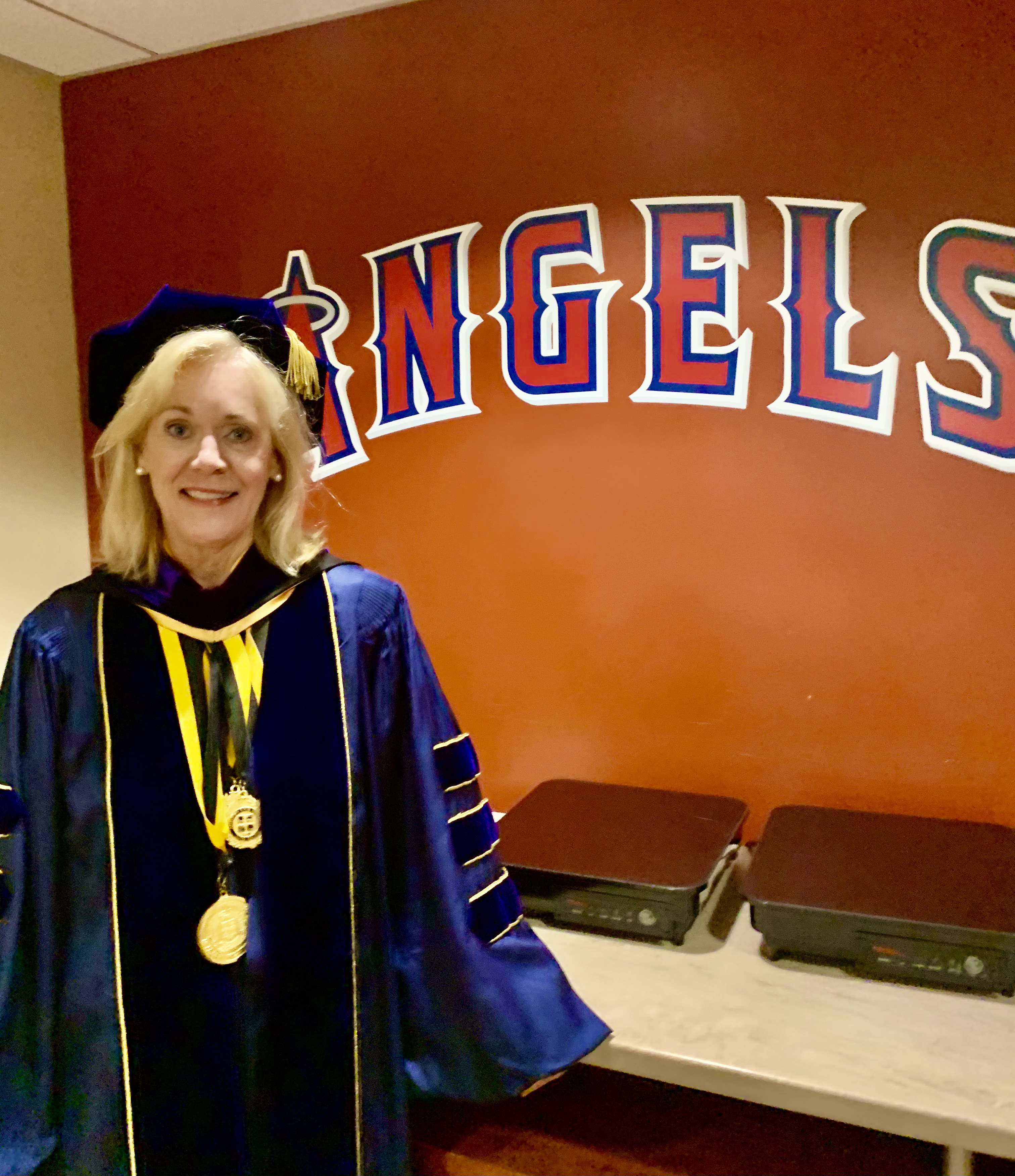
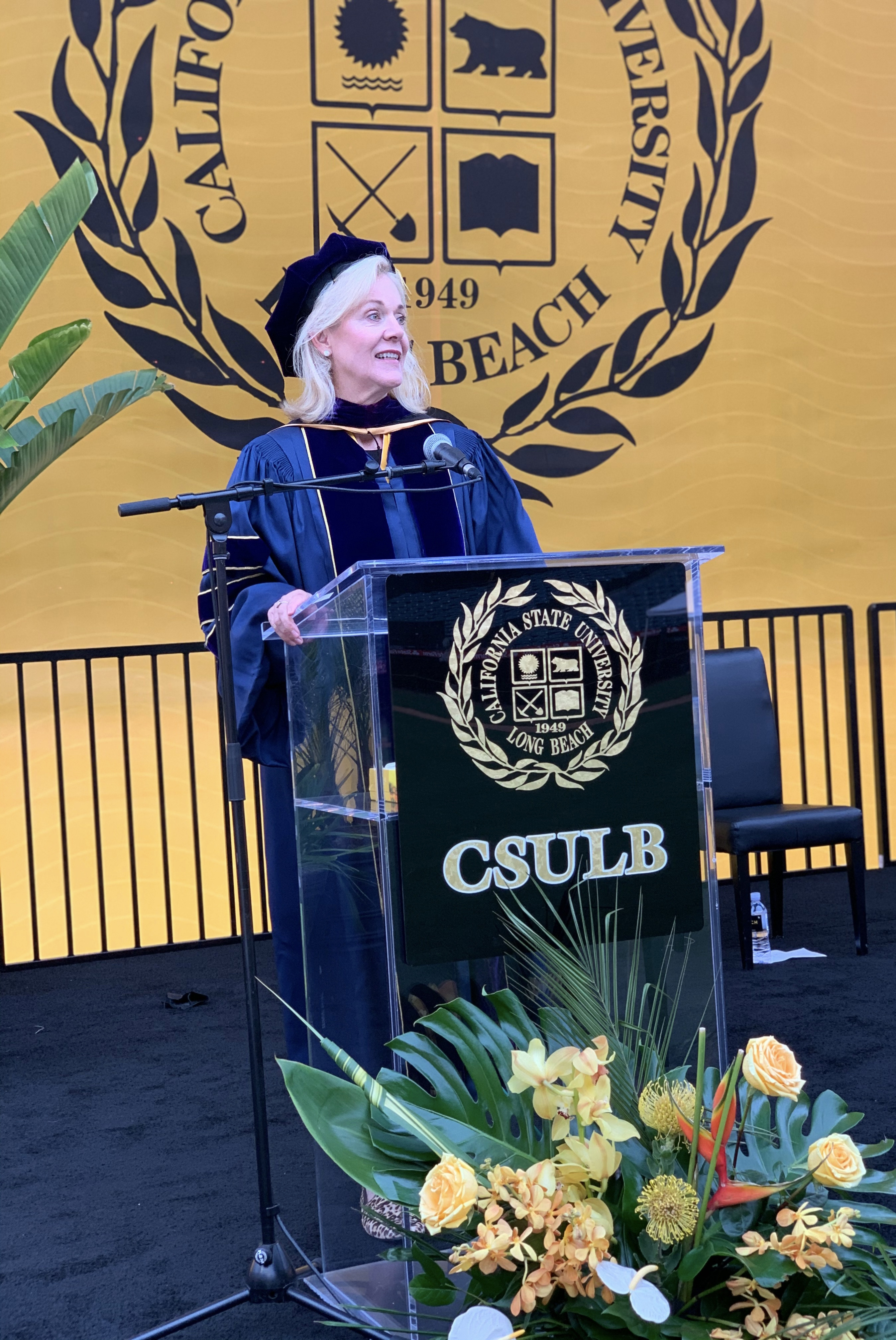
It was my great honor recently to be the Commencement Speaker for California State University, Long Beach, College of Education. The ceremony took place at Angel’s Stadium, and it was inspiring for me to witness the enthusiasm of hundreds of students receiving their doctorates, master’s and bachelor’s degrees, and teaching credentials. Although the message was delivered to graduating students, I decided to use it as a blog post since the comments are equally applicable to educators who have experienced one of the most difficult years imaginable. Hopefully you’ll find my comments encouraging. 

It’s a privilege to deliver the commencement address for this incredible group of students who have persevered through one of the most challenging times in the history of the world. I’m reminded of a quote from Supreme Court Justice Sonia Sotomayor, “There are uses to adversity, and they don’t reveal themselves until tested. Whether it’s serious illness, financial hardship, or the simple constraint of parents who speak limited English, difficulty can tap unexpected strengths.” Each one of you has tapped your strength, your perseverance. You’ve already experienced adversity and have come through the other side. And you’re to be congratulated.

This is a momentous time in your lives. You are deciding on next jobs, next steps, careers, or further education. As I thought about my remarks today, I reflected on lessons I’ve learned and would like to share with you. 

  1. Go the extra mile. I was the only person in my family who went to college. I lived at home and commuted to California State University, Long Beach while working as a waitress to pay tuition and living expenses. Given my background, my greatest ambition was to finish college and be a special education teacher. I was passionate about it – and I still am.  I went the extra mile and got my bilingual certification to better prepare me to work as a special education teacher. I had no idea the doors that would open as a result. Many times, you don’t want to do something extra, to serve on a committee, attend a professional development seminar, or take the lead on a project. It takes extra work and time, but often these are the most rewarding and valuable experiences. You never know the benefits you’ll reap. As writer Israelmore Ayivor says: “People may teach you, people may advise you, people may inspire you, but it takes you to go the extra mile and make an indelible impact!” 
  2. Be willing to take risks. When I was a high school teacher, working on my master’s degree in bilingual special education in the evenings, I was very content in my job. One of my graduate professors, Stephen B. Ross, offered me the opportunity to teach English at a university in Taiwan. That was before we had the internet (yes, I am that old!) and it seemed crazy to leave a secure teaching position and go across the world. Half of my friends kept thinking that I was going to Thailand! Anyway, I took the risk. It was hard, there was initial culture shock and loneliness (phone calls were very expensive, it was almost impossible to get a clear connection and letters took two weeks to deliver), but it was the single best decision of my life to that point – it was truly life-changing. I learned the beauty of another country’s culture, its people and language. I also developed a strong sense of independence and an inner strength to do things that I had never even dreamed of previously. 

When I returned to the U.S., I resumed my teaching career. One day a colleague contacted me about a teaching position at Loyola Marymount University in bilingual special education. At that time, I was the only person in California who had a degree in bilingual special education. (Remember the benefit of going the extra mile?). The position was funded by a 5-year grant so if I left the district, I’d give up all the security that I’d accumulated and step into an unknown future. Having taken one risk, going to Taiwan, empowered me to take another. I took the job and completed my Ph.D. at UCLA. The experience I gained prepared me for a position as a professor at CSULB where I worked with amazing colleagues and flourished in my career. 

For the first 10 years of my career, I never imagined where the path I was on would take me, including doing research, writing professional books, or being invited to speak all over the world to educators. You can’t predict how you’ll use your education. As you get older, your interests and your skills will grow and evolve. My advice is to be open to change. Don’t be afraid to try something new. It might be changing schools, taking a leadership position, or entering into a professional partnership. Take a risk when opportunity arises. 

3. Follow your passion. You picked your field of study for a reason. What was the idea or problem or experience that aroused your passion? Identify the things that really resonated with you in your field experiences and your course work. Then, surround yourself with others who share your passion.  I’m fortunate to have collaborated with two colleagues, Dr. Deborah Short and Dr. MaryEllen Vogt, for more than 25 years. They are equally passionate about educating English learners, and without them I can humbly say that my career would not have been the same. Our synergy propels us to explore new ideas and projects. Collaborate with others who are passionate, and stay away from negativity, the nay-sayers, those who don’t have vision and resent yours. As Albert Einstein said, “Stay away from negative people. They have a problem for every solution.” I have found those words to be true. During tough periods in your career – and you will have them – tap into your passion and embrace it. Let it feed you, inspire you, keep you keeping on. 

Each of you has selected a profession that is in service to others. These are honorable professions, and you are to be commended for your choices. Ultimately, it’s not the things you accumulate in life that bring you joy, it is helping others, being compassionate, touching lives, and making a difference in the world. 

As you embark on your future, consider which of your professors influenced you or inspired you? What qualities does he or she possess? Or those of a fellow student with whom you wanted to work, or someone in whom you could trust or confide? Most of us can identify people in our lives who stand out, who we gravitate toward, who we feel better for having been with. Become that person. Exude those qualities for your students, your clients, the people in your sphere of influence. In the long run, that’s what others will remember about you. Be the person who, down the road, others will say inspired them. 

Remember it’s not what you are but who you are that matters most. 

In closing, this has been an extraordinary year! There is much for you and your families to celebrate today. You’ve received a world-class education and I can’t wait to see what you do with it.

Research to Practice for English Learners: Interview with an Expert

There are some common practices in schools that have no research base or worse, studies show the practice or idea isn’t effective. Yet these practices persist. 

For this month’s blog, I turned to colleague Claude Goldenberg, to get his take on how research studies with English learners can translate into classroom practice. He is Professor Emeritus in the Graduate School of Education at Stanford University and an expert on English learners. 

Let’s start with what research is. There are lots of practices in schools that are said to be “research-based.” What does that mean or should it mean? What can accurately be counted as research?

Well, there isn’t an easy answer.  The NRC (National Research Council) 2002 report, Scientific Research in Education, lays out a reasonable definition. It includes systematic investigations posing questions that can be answered empirically, investigating questions directly and transparently, looking for replication and generalization, identifying and further investigating limits to our understanding. 

We generally hold up RCTs (randomized control trials) as the ultimate in scientific research, and these are of course very valuable to establish causal relations between a practice, curriculum, or technique on the one hand and some desired (or UNdesired) outcome on the other. For example, does a certain vocabulary intervention result in increased (or decreased!) word knowledge, or does a certain program accelerate English language development? Not just one RCT but a number of RCTs converging on common findings might be the strongest way to demonstrate the effect of some practice or procedure. But that’s not always possible, and generally rare in education, so we often have to deal with less than ideal evidence. 

The key thing educators need to ask when they look at or read about a study is, “Does the study ask a question that’s relevant to what I want to do or what I need to know?” Teachers typically want to know whether doing this will work better than doing that. For example, if I use heterogeneous grouping will students do better than when grouped by skill or language proficiency? Or we might want to learn about a group of students from different parts of the world. Research that addresses questions about these students’ customs and practices can be very informative. So that’s the first thing: Look for studies that address questions that will help inform your practice. If a study doesn’t, then even if it’s peer reviewed it’s unlikely to be helpful. 

Next, the study needs to have collected credible empirical evidence, aka data, that answers the question. Typically—but not always— a study published in a peer-reviewed journal will have collected data that are at least reasonably credible. But we often come across studies not found in peer reviewed journals, so the best thing to do is to read all research skeptically, which means actively looking for ways the data, and therefore the findings, might be biased or misleading. Ask questions such as, How were subjects recruited, and could the recruitment process tilt the findings one way or another? What measures were used, and do they address the question adequately and fairly? What claims is the author making, and do the data support the claims, or are the claims speculation that goes beyond what the study actually found?  

But, again, it all begins with a clear and relevant question that can be addressed by collecting and analyzing relevant data. That’s the bottom line. Or lines, I guess.

For English learners, what are the most important research findings that teachers can implement in their classrooms?

Effective instruction for ELs has many similarities with effective instruction for non-ELs. A non-all-inclusive list includes clear, relevant, and meaningful goals and expectations; well-organized, clear instruction and engaging materials and activities directly related to goals and expectations; formative assessments and checking for understanding; feedback that is useful for accomplishing goals and meeting expectations.

With respect to beginning reading instruction specifically, ELs need the same foundational instruction as anyone else: That letters represent sounds; how letters are used to sound out words; and how to fluently read words, sentences, and paragraphs so that reading development can proceed. (This is true whether ELs are learning to read in English or in their home language.) Things get more complex as students get to intermediate and advanced reading levels, but, again, ELs need to learn the same things as non-ELs do.

While there are important similarities in effective instruction for ELs and non-ELs, ELs receiving instruction in English require additional support, primarily with regard to English language development. ELs (and their teachers) face the double-barreled challenge of learning the academic content everyone must learn while simultaneously learning to become proficient in oral English. Unfortunately, we don’t have good evidence about how to narrow the achievement gap in English when students are not yet proficient in English. We have some tools and ideas that might help, but we have a long ways to go. I’d put primary emphasis on figuring out how to help ELs accelerate their English language development. This doesn’t mean exclusively all-English instruction. When tried, English-only policies have not been successful. Rather, there’s evidence that long-term bilingual education at least through middle school, in contrast to short-term transition bilingual education and English-only instruction, can help accelerate English language proficiency. We must work on improving ELs’ English language instruction and development regardless of the program they are in.

Since English learners don’t understand the language of instruction well, how would you suggest that teachers compensate so students understand subject matter content?

The only practice that I know of that has been especially helpful for ELs, more so than for non-ELs, is using video to help students understand key concepts and vocabulary. A study a few years ago found that showing ELs in preschool to second grade short video clips explaining and illustrating key science concepts significantly helped them learn the vocabulary and concepts, so much so that they closed the gap with their non-EL peers on those items. 

Other learning opportunities are also probably important, e.g., opportunities for students to discuss the content and use the target language while reinforcing content concepts, incorporating visual aids and providing hands-on learning opportunities, and building on and leveraging students’ experiences and knowledge to tie instruction to content that’s familiar to them. Probably the most important thing—although we don’t have very good data on this—is to accelerate ELs’ English language development. Absent that, it’s unlikely we’ll close the achievement gap. 

To be very clear, “accelerating English language development” does not automatically mean full-on English immersion. To the contrary, we have evidence that over the long term, dual language instruction can hasten the English proficiency. “Accelerating English language development” simply means what it says, and that can be done in both bilingual and English-only programs. A study with kindergarten and first graders found that a few years ago. 

What is one common misconception about teaching English learners?

That ELs require an entirely different set of instructional tools, strategies, and techniques than do non-ELs.

If you had one piece of advice for teachers who have ELs in their classes, what would it be?

Use what we know about effective teaching. That’s the main grist for the mill. Clear, focused instruction with the attributes listed above. In addition, as with all students, connecting with their life experiences helps make things relevant for them. For example, it used to be that parents wrote letters home to family in their country of origin and writing letters was a regular occurrence in my classroom. I’d give a homework assignment to write a letter to their abuelita or other relative. Now they text, phone, email or TikTok to communicate. Try to connect with students’ lived experiences in a way that leverages those experiences to help you teach what you want to teach and they need to learn. 

Culturally relevant pedagogy (or culturally responsive or culturally sustaining) is an important idea, but there is very little evidence that, in and of itself, it positively impacts achievement. Ideally, it would be part of—but it can never replace—clear, focused instructional practice that helps students acquire content knowledge, academic skills, and English language proficiency. And, again, these can be done in bilingual programs or in English-only programs. My personal preference, because of the value of bilingualism and biliteracy, is for long-term bilingual education programs that actively promote bilingualism and biliteracy. If it were up to me, all students—ELs and non-ELs—would graduate high school proficient in at least two languages, sort of like what most of the rest of the world does.

We’re grateful to Claude for discussing his perspective on research with us. Long-time readers of this blog will recognize that SIOP incorporates the specific practices mentioned for making subject matter comprehensible. In addition, students have opportunities to use and produce English in their content classrooms. 

You can read two recent articles by Claude here and here.